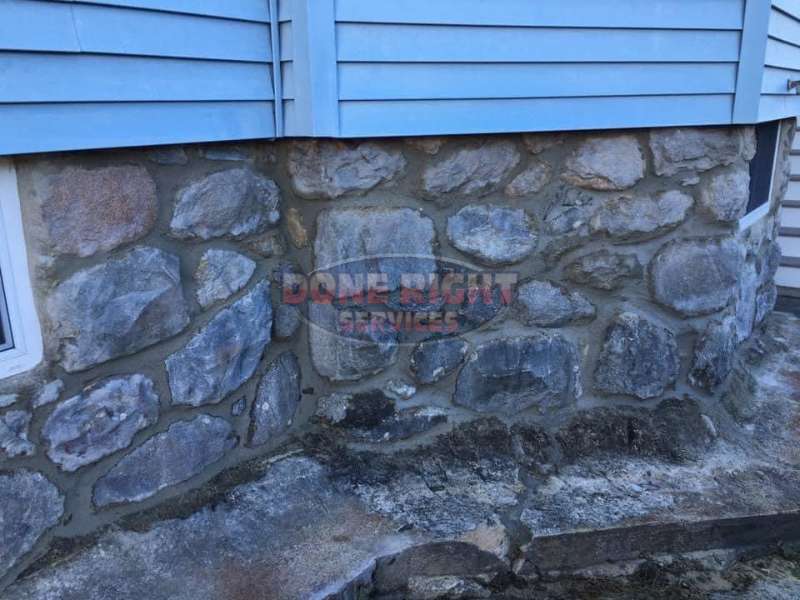
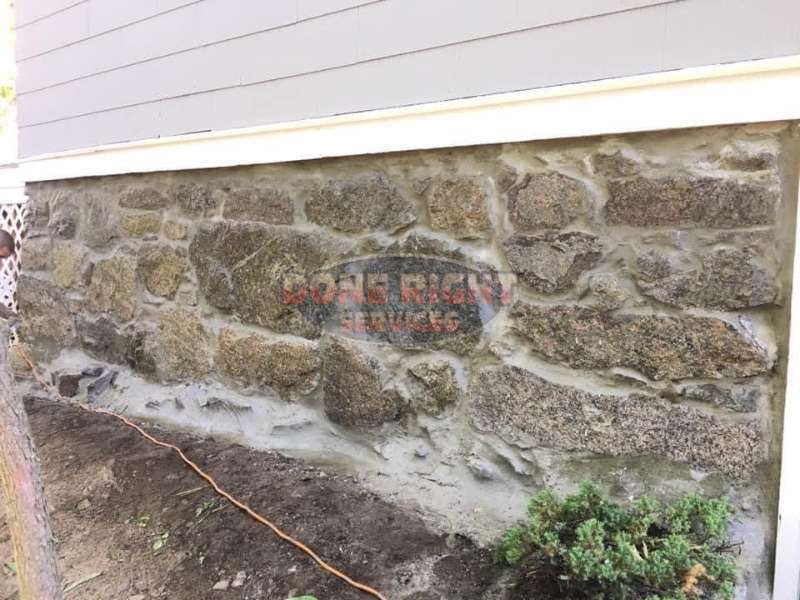
If you own an older home in Massachusetts or New Hampshire, there is a good chance your house sits on a fieldstone foundation. These sturdy, centuries-old structures were built by hand using stones pulled directly from the land, and they have supported New England homes through harsh winters, spring thaws, and everything in between. But even the toughest foundations need maintenance, and fieldstone foundation repointing is one of the most important services you can invest in to protect your home for generations to come.
This guide walks you through everything you need to know about stone foundation repair in the Northeast, from spotting early warning signs to understanding the repointing process and finding the right contractor in MA or NH.
What Is Fieldstone Foundation Repointing and Why Does It Matter?
Repointing, sometimes called tuckpointing, is the process of removing deteriorated mortar from the joints between stones and replacing it with fresh mortar. Over time, the original mortar in a fieldstone foundation breaks down due to moisture, freeze-thaw cycles, and the natural aging of materials. In Massachusetts and New Hampshire, the climate is particularly demanding. Winters bring repeated cycles of freezing and thawing that expand and contract the mortar joints, causing cracking, crumbling, and eventual failure.
When the mortar joints in a fieldstone foundation fail, water finds its way in. That moisture can lead to basement flooding, mold growth, wood rot, and structural instability. What starts as a small crack in a mortar joint can become a serious and expensive problem if left unaddressed. Fieldstone foundation repointing is not just a cosmetic fix; it is a critical structural repair that preserves the integrity of your entire home.
Historic foundation restoration is especially important in states like Massachusetts and New Hampshire, where a large percentage of the housing stock dates back to the 18th and 19th centuries. Many of these homes are cherished for their character and history, and proper repointing helps maintain that legacy without compromising the original construction.
Recognizing the Signs That Your Foundation Needs Repointing
Knowing when to call a professional for stone foundation repair starts with understanding what to look for. One of the most obvious signs is crumbling or missing mortar between the stones. If you can scrape the mortar out with a screwdriver or your fingernail, it has already lost its structural integrity and needs to be replaced.
Efflorescence is another warning sign. This is the white, chalky residue that appears on the surface of stones and mortar when water moves through the foundation and deposits minerals on the exterior. While efflorescence itself is not structurally dangerous, it is a clear indicator that water is actively penetrating your foundation.
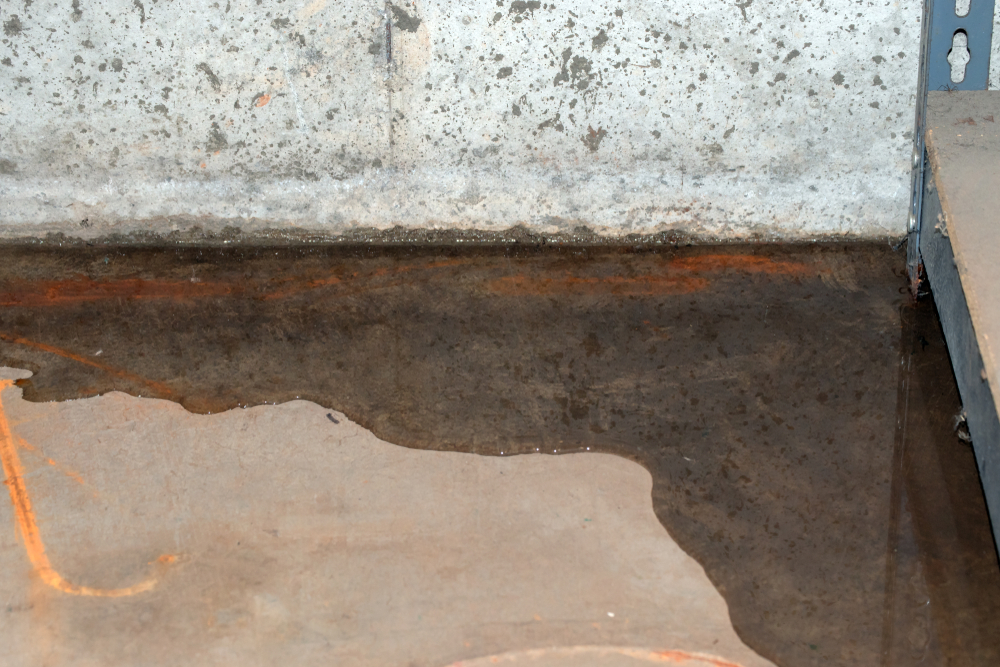
Water stains, dampness, or puddles in your basement are also red flags. Many homeowners in MA and NH assume basement moisture is just a normal part of owning an old home, but in many cases, it is directly related to failing mortar joints. Cracks in the foundation wall, stones that appear to be shifting or bulging, and doors or windows that no longer close properly can all point to foundation movement caused by compromised mortar.
If your home is more than 75 to 100 years old and the foundation has never been repointed, it is worth having a professional evaluation even if you have not noticed any obvious issues. Preventive maintenance is always less expensive than emergency repair.
The Repointing Process: What to Expect
Understanding what goes into fieldstone foundation repointing helps you set realistic expectations and ask the right questions when hiring a contractor. The process is detailed and labor-intensive, which is why it should only be handled by experienced masons with knowledge of historic masonry techniques.
The first step is a thorough inspection of the entire foundation. A skilled mason will assess the condition of both the mortar joints and the stones themselves, identifying areas of active water intrusion, structural movement, or significant deterioration. This evaluation shapes the scope of work and the approach that will be taken.
Next comes the removal of old mortar. This is done carefully using hand tools, chisels, and sometimes small grinders, with the goal of removing deteriorated material to a depth of at least one inch without damaging the surrounding stones. This step requires patience and skill, particularly in historic foundation restoration work where preserving the original stonework is a priority.
Once the old mortar is removed, the joints are cleaned of dust and debris, and the stones are dampened to prevent them from drawing moisture out of the fresh mortar too quickly. Then the new mortar is applied in layers, carefully packed into the joints and tooled to match the historic profile.
One of the most important decisions in any stone foundation repair project in Massachusetts or New Hampshire is the mortar mix. Using the wrong type of mortar is one of the most common and damaging mistakes in historic masonry work. Modern Portland cement mortars are much harder than the original lime-based mortars used in 18th and 19th century foundations. When a hard mortar is used with soft, historic stones, the mortar does not flex with seasonal movement. Instead, it forces stress into the stones themselves, causing cracking and spalling that can permanently damage irreplaceable historic material.
For most fieldstone foundation repointing projects in MA and NH, a natural hydraulic lime mortar or a lime putty mortar is the appropriate choice. These materials are breathable, flexible, and compatible with historic stonework. They allow moisture to escape rather than trapping it behind the wall, which is critical in New England’s wet climate.
Hiring the Right Contractor for Stone Foundation Repair in MA and NH
Choosing the right contractor for fieldstone foundation repointing in Massachusetts or New Hampshire is not as simple as calling the first name you find online. Historic masonry is a specialized trade, and not every mason has the training or experience to work correctly on older foundations.
Start by asking specifically about their experience with fieldstone and historic lime mortars. A knowledgeable contractor should be able to explain why mortar selection matters and should advocate for the use of appropriate materials rather than defaulting to modern cement mixes.
Ask for references from past clients, particularly those with similar historic properties in MA or NH. Visit completed projects if possible, and look for consistent joint profiles, clean tooling, and no signs of staining or damage to the surrounding stones.
It is also worth checking whether the contractor has any experience working with the Massachusetts Historical Commission or local historic districts in New Hampshire. If your home is listed on the National Register of Historic Places or located within a historic district, there may be guidelines governing what materials and methods can be used. A contractor familiar with these requirements can save you from costly compliance issues.
Get detailed written estimates that specify the mortar mix to be used, the depth of mortar removal, the scope of work, and the projected timeline. Be cautious of contractors who offer unusually low bids, as cutting corners on material quality or mortar removal depth can result in a repair that fails within just a few years.
Conclusion
Fieldstone foundation repointing is one of the most valuable investments you can make in a historic New England home. In Massachusetts and New Hampshire, where old stone foundations face some of the most demanding weather conditions in the country, proper historic foundation restoration is not optional; it is essential. By understanding the signs of mortar failure, the importance of correct mortar selection, and what to look for in a qualified contractor, homeowners in MA and NH can protect their foundations and preserve the character of their homes for many decades to come.
Need The Best Foundation Crack Repair Specialist Near You?
At Done Right Services, we’ve been the trusted name in masonry since 1998, offering top-notch stone foundation repairs, crack repairs, and basement waterproofing throughout Massachusetts and New Hampshire. Our team of experts is dedicated to restoring your home’s foundation and ensuring your basement stays dry and safe. With our lifetime warranty and 15-year money-back guarantee on all concrete foundation services, you can trust that we’ll handle your needs with precision and care. Don’t let water leaks or foundation issues damage your home—reach out to us and experience the Done Right difference today!
From heavy snowmelt in the spring to relentless humidity in the summer, moisture finds its way into places it has no business being, and the basement is often the first casualty. Poor basement waterproofing does far more than leave a puddle on your floor. It sets off a chain reaction that quietly degrades the air your family breathes every single day. Understanding how moisture problems in the basement affect your indoor air quality is the first step toward protecting your home and your health.
The Connection Between Moisture and Indoor Air Pollution
Most homeowners think of air quality as an outdoor concern, something tied to traffic or pollen counts. But the Environmental Protection Agency has noted for years that indoor air can be significantly more polluted than outdoor air, and a damp basement is one of the most common culprits in residential settings.
When water seeps through an unprotected or poorly sealed foundation, it introduces persistent moisture into your basement environment. That moisture does not stay put. Through a process called the stack effect, air from the lower levels of your home naturally rises upward through the living spaces. This means that whatever is lurking in your basement air, whether that is mold spores, mildew odors, or airborne particles from deteriorating building materials, gets pulled right into the rooms where you sleep, eat, and spend your time.
In New Hampshire, where basements are a standard feature of nearly every older home and most new construction, basement waterproofing is not a luxury. It is a necessity that directly influences the quality of the air circulating throughout your entire house.
What Grows When Water Gets In
The most significant biological threat that comes with a damp basement is mold. Mold requires only a few conditions to thrive: a food source (wood, drywall, insulation), a suitable temperature, and moisture. A basement with poor waterproofing provides all three.
Mold colonies can begin forming within 24 to 48 hours of water exposure. Once established, they release microscopic spores into the air continuously. Inhaling these spores over time can trigger allergic reactions, asthma flare-ups, sinus congestion, and respiratory irritation. For children, the elderly, or anyone with a compromised immune system, the health consequences can be considerably more serious.
Beyond mold, moisture problems in the basement also encourage the growth of mildew and create ideal breeding conditions for dust mites, both of which are well-documented allergens. The musty odor that so many NH homeowners associate with their basements is not just unpleasant. It is a sign that biological activity is actively happening in your home, and that activity is affecting your air.
Foundation waterproofing services in NH often address these biological concerns as part of a broader remediation process. Sealing the foundation cuts off the moisture supply, which in turn starves the mold and mildew of the one ingredient they cannot survive without.
How Structural Damage Makes Air Quality Worse
Poor waterproofing does not just invite mold. It accelerates the breakdown of the very materials that make up your home, and deteriorating materials release their own set of air quality problems.
When water repeatedly infiltrates a basement, it begins to compromise wood framing, floor joists, and support beams. As wood rots, it becomes a feeding ground for mold and releases particulates into the air. Fiberglass insulation that gets wet loses its effectiveness and can become a reservoir for mold growth and trapped dust. In older New Hampshire homes, there is also the concern of disturbed or degraded materials that may have been installed decades ago, materials whose breakdown can release harmful particles into the indoor environment.
Efflorescence, the white chalky residue that appears on basement walls when water carries minerals through concrete, is another indicator of ongoing moisture movement. While efflorescence itself is not a direct health hazard, it signals that water is regularly penetrating your foundation walls. That same water is feeding everything else that damages your air quality.
Addressing moisture problems in the basement through proper foundation waterproofing services in NH stops this cycle before structural degradation reaches the point where air quality becomes a serious health concern for your household.
New Hampshire’s Climate and Why It Creates Unique Risks
New Hampshire presents a particularly demanding environment for basement waterproofing. The state experiences a full range of seasonal extremes. Winters bring deep freezes and heavy snowpack. Spring thaws send large volumes of water through saturated soil toward foundations. Summers bring humidity levels that can remain stubbornly high for months. Fall introduces freeze-thaw cycles that stress foundation walls and widen existing cracks.
This climate variability means that NH homes face moisture pressure from multiple directions and in multiple forms throughout the year. A basement that seems dry in October may be dealing with significant water infiltration by April. Homeowners who assume their basements are fine because they have not seen standing water may not realize that vapor transmission through walls and floors is quietly elevating humidity levels and setting the stage for air quality problems.
The freeze-thaw cycle deserves particular attention. When water enters a small crack in a foundation wall and then freezes, it expands, widening the crack further. Over several winters, what began as a hairline fracture becomes a meaningful gap through which both water and outdoor air can enter freely. That outdoor air in the shoulder seasons often carries mold spores and allergens from the surrounding landscape directly into your basement and then upward through your home.
Investing in basement waterproofing tailored to New Hampshire’s specific climate demands is not an overreaction. It is a practical response to conditions that genuinely put foundations and air quality at risk year after year.
Recognizing the Warning Signs and Taking Action
Many homeowners in New Hampshire live with damp basement air quality issues for years without connecting them to the health symptoms or comfort problems they experience upstairs. Knowing what to look for can help you act before the situation becomes severe.
Persistent musty odors in any part of the home, not just the basement, are one of the clearest early indicators. Condensation on basement walls or windows, even in the absence of visible water, points to elevated humidity driven by moisture intrusion. Staining on concrete walls, rust on metal fixtures, and peeling paint on basement walls are all signs that water is moving through your foundation regularly.
Upstairs, symptoms like unexplained allergy flare-ups, worsening asthma, chronic sinus congestion, or a general sense that the air feels heavy or stale can all trace back to what is happening below grade. If your HVAC system pulls air from the basement or if you have ductwork running through the basement, contaminated air from that space is being distributed actively throughout your home.
Professional foundation waterproofing services in NH can assess the specific vulnerabilities of your basement, whether that involves interior drainage systems, exterior waterproofing membranes, sump pump installation, or vapor barriers, and recommend a solution matched to your home’s construction and your region’s climate challenges.
Conclusion
Poor basement waterproofing is not a cosmetic issue. In New Hampshire, where climate extremes put continuous pressure on foundations, unaddressed moisture problems in the basement translate directly into degraded indoor air quality and measurable health risks. Mold, mildew, structural decay, and airborne particulates all follow from water intrusion. Taking basement waterproofing seriously protects not just your foundation but the air your family breathes every single day.
Need The Best Foundation Crack Repair Specialist Near You?
At Done Right Services, we’ve been the trusted name in masonry since 1998, offering top-notch stone foundation repairs, crack repairs, and basement waterproofing throughout Massachusetts and New Hampshire. Our team of experts is dedicated to restoring your home’s foundation and ensuring your basement stays dry and safe. With our lifetime warranty and 15-year money-back guarantee on all concrete foundation services, you can trust that we’ll handle your needs with precision and care. Don’t let water leaks or foundation issues damage your home—reach out to us and experience the Done Right difference today!
Spring has finally arrived in Massachusetts, bringing warmer temperatures and longer days. For homeowners with stone foundations, this season represents the ideal window for scheduling essential maintenance and repairs. If you have been considering stone foundation repointing in Massachusetts, now is the time to act. The combination of weather conditions, contractor availability, and the urgent need to address winter damage makes spring the optimal season for this critical home improvement project.
Stone Foundation Repointing and Its Importance
Stone foundation repointing is a specialized process that involves removing deteriorated mortar from between fieldstone blocks and replacing it with fresh, properly formulated mortar. This technique is essential for maintaining the structural integrity of older Massachusetts homes that feature fieldstone foundations. Over time, the mortar that holds these stones together breaks down due to exposure to freeze-thaw cycles, moisture infiltration, and natural settling of the structure.
Many Massachusetts homeowners own properties built over a century ago, and their original stone foundations have endured countless weather patterns. The mortar in these foundations can develop cracks, gaps, and crumbling sections that compromise the entire foundation’s effectiveness. A historic foundation repair project like repointing stone foundation in MA requires professional expertise and precision craftsmanship. Neglecting this maintenance allows water to penetrate the foundation, leading to basement dampness, mold growth, structural deterioration, and expensive repairs down the line.
Winter Damage Assessment and Spring Repair Urgency
Massachusetts winters are notoriously harsh, with repeated freeze-thaw cycles that wreak havoc on aging stone foundations. When water seeps into existing mortar cracks and freezes, it expands with tremendous force, widening the gaps and accelerating deterioration. By the time spring arrives, many homeowners discover significant new damage to their fieldstone foundation repair needs that was not visible in the previous fall.
Spring provides the perfect opportunity to assess winter damage while addressing previously known issues. The warmer temperatures make it safer and more practical for contractors to work on exterior foundation walls. Workers can stand on scaffolding without excessive cold wind and freezing conditions. The ground has thawed sufficiently for contractors to access the foundation perimeter without struggling through snow and ice. Additionally, spring rains, while sometimes inconvenient, are typically lighter and less severe than winter precipitation, allowing for adequate curing time for the new mortar between applications.
Homeowners who schedule their stone foundation repointing in Massachusetts during spring demonstrate wisdom in property maintenance planning. By addressing deterioration early, they prevent the compound damage that occurs when water infiltrates deeper into the foundation structure over subsequent seasons. A small investment in timely repairs prevents the exponential costs associated with major structural failures.
Ideal Weather Conditions for Mortar Curing
The success of any repointing stone foundation in MA project depends heavily on proper mortar curing conditions. Mortar needs specific temperature and humidity ranges to set correctly and achieve maximum strength. Spring weather in Massachusetts typically provides these ideal conditions, though late spring is preferable to early spring.
Mortar cures best when temperatures remain between 50 and 85 degrees Fahrenheit. Too-cold temperatures slow the curing process dramatically or prevent proper set altogether. Too-hot temperatures cause rapid surface drying while the interior remains soft, resulting in weak mortar that will fail prematurely. Spring temperatures in Massachusetts, particularly mid-April through May, fall perfectly within the optimal range for mortar curing.
Additionally, spring moisture levels support proper curing without creating problems. While the mortar needs some moisture to cure correctly, excessive wetness prevents proper setup. Spring weather provides a balance of moisture and drying periods that contractors can manage effectively. Summer heat can be problematic because the intense sun causes rapid surface drying while also potentially drying the mortar too quickly to achieve full strength development.
Contractors specializing in historic foundation repair in Massachusetts understand these nuances and plan their projects accordingly. They avoid winter scheduling when cold temperatures interfere with curing, and they plan carefully during summer months to work during early morning and late afternoon hours when temperatures are more moderate.
Contractor Availability and Project Planning
Spring is the busy season for masonry contractors throughout Massachusetts, but this also means that experienced specialists are more readily available than during other seasons. Contractors who handle historic foundation repair projects tend to schedule their work strategically, and spring booking fills up quickly. Homeowners who call for estimates in March or early April can often secure appointments and schedule work before the peak summer construction season consumes all available capacity.
The repointing stone foundation in MA specialists understand that spring offers the best market conditions for this type of work. They stock necessary materials, schedule experienced masons, and prepare their equipment for the intensive work that proper stone foundation repointing requires. Waiting until summer or fall means competing with other homeowners for limited contractor availability and potentially accepting less experienced workers or longer project timelines.
Moreover, contracting in spring allows homeowners to complete their projects before summer events like family vacations, outdoor entertaining, or seasonal travel plans. Finishing the work before hot weather arrives also means the new mortar has adequate time to cure fully before fall rains begin washing over the completed work. A foundation repaired in May will have fully hardened mortar by September, providing maximum protection against autumn weather.
Protecting Your Massachusetts Home Investment
Historic foundation repair in Massachusetts represents a significant investment, but it is an absolutely necessary one for homeowners committed to property preservation. A stone foundation in good condition protects everything above it, including the entire structure’s integrity. Water infiltration through deteriorated mortar causes cascading problems: wet basements, foundation rot, structural settling, and damage to the home’s lowest levels.
Spring scheduling for stone foundation repointing in Massachusetts allows homeowners to address problems before they compound. Moisture that seeps through deteriorated mortar during winter snow melt and spring rains can cause mold growth that spreads throughout basement spaces and creates health hazards. This same moisture promotes wood rot in sill plates, joists, and other wooden structural members in contact with the foundation. The expense of repointing becomes negligible compared to costs of replacing rotted wood structural members or remediating mold contamination.
Fieldstone foundation repair represents preventative maintenance that protects a home’s resale value and livability for years to come. A properly maintained stone foundation demonstrates to potential buyers that the home has been cared for responsibly. Insurance companies view properties with well-maintained foundations more favorably. Property appraisers recognize that a sound foundation supports a sound overall structure.
Conclusion
Spring is unquestionably the best season for scheduling stone foundation repointing in Massachusetts. The weather conditions support proper mortar curing, contractor availability peaks during this season, and winter damage becomes clearly visible as snow melts. Homeowners with aging stone foundations should contact qualified specialists now to schedule consultations and plan their historic foundation repair projects. Acting during spring weather protects homes from further deterioration while taking advantage of ideal working conditions that ensure quality results and long-lasting repairs.
Need The Best Foundation Crack Repair Specialist Near You?
At Done Right Services, we’ve been the trusted name in masonry since 1998, offering top-notch stone foundation repairs, crack repairs, and basement waterproofing throughout Massachusetts and New Hampshire. Our team of experts is dedicated to restoring your home’s foundation and ensuring your basement stays dry and safe. With our lifetime warranty and 15-year money-back guarantee on all concrete foundation services, you can trust that we’ll handle your needs with precision and care. Don’t let water leaks or foundation issues damage your home—reach out to us and experience the Done Right difference today!
When summer arrives in New Hampshire, homeowners often face unexpected challenges with their basements. Stone foundations, while architecturally charming and historically significant, can become problematic during heavy rainfall and seasonal humidity. Understanding the importance of foundation waterproofing is essential for protecting your home from water damage. This comprehensive guide explores how waterproofing your stone foundation prevents basement leaks during New Hampshire summers and helps you maintain a dry, healthy basement.
Stone Foundations in New Hampshire
Stone foundations are common throughout New Hampshire, particularly in older homes and properties with historical significance. These foundations were built using stacked fieldstone, granite, or other local stones held together with mortar. While these structures have proven durability over centuries, they are particularly vulnerable to water infiltration during the intense summer storms that New Hampshire experiences.
The porous nature of stone allows water to seep through gradually over time. Additionally, the mortar joints between stones deteriorate due to freeze-thaw cycles common in New England winters. By spring and early summer, these weakened joints become entry points for basement water. New Hampshire’s seasonal weather patterns create perfect conditions for foundation problems. The combination of spring snowmelt, heavy summer thunderstorms, and high groundwater levels puts tremendous pressure on stone foundations. Without proper basement waterproofing measures, homeowners face inevitable water intrusion that can lead to mold growth, structural damage, and costly repairs.
The Science Behind Water Infiltration
Water infiltration in basements occurs through multiple pathways in stone foundations. Hydrostatic pressure from groundwater pushes moisture through pores and cracks in the stone and mortar. During New Hampshire summers, intense rainfall can overwhelm the soil’s ability to absorb water, creating conditions where water pools against foundation walls. This standing water exerts significant pressure on the foundation, forcing moisture through even tiny openings.
Capillary action also plays a role in stone foundation leak repair. This process occurs when water moves upward through the stone against gravity, traveling through micro-sized pores. This phenomenon is particularly problematic in basements because it allows moisture to penetrate walls even when no active water sources exist. The stone foundation leak repair process must address both hydrostatic pressure and capillary action to be fully effective.
Temperature and humidity fluctuations in New Hampshire also contribute to foundation problems. Summer heat causes stone and mortar to expand, while cooler evenings create contraction. This constant movement creates tiny cracks that widen over seasons. These expanding cracks become pathways for water during heavy rains, making wet basement solutions increasingly necessary for older homes.
Exterior Waterproofing Solutions
Exterior foundation waterproofing represents the most comprehensive approach to basement waterproofing in New Hampshire. This method involves excavating around the foundation to access the exterior walls directly. Once exposed, contractors apply waterproof coatings, membranes, or sealants specifically designed for stone foundations. These materials create a barrier that prevents water from penetrating the stone and mortar.
Exterior grading and drainage improvements are critical components of this approach. Proper grading ensures water slopes away from the foundation rather than pooling against it. Installing or improving exterior drainage systems, such as French drains or perimeter drains, redirects water away from the foundation. These wet basement solutions are particularly effective in New Hampshire, where the landscape often slopes toward homes.
Additionally, exterior waterproofing may include installing new gutters, downspouts, and extensions that direct roof water at least five feet away from the foundation. Many basement leaks originate from water that pools near the foundation due to inadequate gutter systems. By addressing these exterior elements, homeowners can significantly reduce the water pressure on their stone foundations during heavy summer rainfall.
Interior Waterproofing and Remedial Measures
Interior basement waterproofing focuses on managing water that does enter the basement rather than preventing it entirely. While not as comprehensive as exterior solutions, interior waterproofing serves as a valuable secondary defense or standalone solution for homes where exterior work is impractical. Interior approaches include installing interior drain systems along the basement perimeter, which collect water seeping through the foundation and direct it to a sump pump.
Sump pumps are essential wet basement solutions for New Hampshire homeowners. These devices automatically activate when water accumulates in a sump pit, pumping water away from the foundation and the home. Installing a backup battery system ensures the sump pump functions even during power outages that sometimes accompany summer storms. Many experts recommend installing both primary and backup systems for maximum protection.
Vapor barriers and interior sealants also contribute to interior waterproofing strategies. These products cannot prevent water intrusion but can reduce moisture vapor transmission through basement walls. Combining interior waterproofing with dehumidification systems helps maintain comfortable humidity levels and prevents mold growth in basements that experience occasional moisture.
Maintenance and Preventive Care
Regular maintenance of your stone foundation waterproofing systems ensures long-term effectiveness. Foundation waterproofing requires periodic inspections to identify deteriorating mortar joints, developing cracks, or damaged waterproof coatings. Homeowners should schedule annual inspections before New Hampshire’s heavy summer season arrives. Professional contractors can assess the condition of exterior drainage systems, gutters, and downspouts.
Repointing deteriorated mortar joints is an important stone foundation leak repair technique. This process involves removing old mortar from between stones and replacing it with new material that matches the original composition and color. New Hampshire contractors specializing in foundation waterproofing understand the unique challenges posed by stone foundations and can perform repointing that preserves historical accuracy while improving water resistance.
Cleaning gutters and downspout systems becomes increasingly important during summer months in New Hampshire. Clogged gutters allow water to overflow, creating pools against the foundation. Monthly cleaning during spring and early summer prevents this common cause of basement leaks. Trimming tree branches that overhang roofs also helps keep gutters clear and functional.
Choosing Professional Foundation Waterproofing Services
Selecting the right contractor for foundation waterproofing in New Hampshire requires careful consideration. Look for companies with extensive experience working with stone foundations specifically, as these require different approaches than poured concrete foundations. Reputable basement waterproofing contractors should provide detailed inspections, clear explanations of their recommendations, and transparent pricing.
Ask potential contractors about their specific experience with New Hampshire climate challenges and local building codes. Request references from previous clients and check online reviews from homeowners in your area. Proper stone foundation leak repair and basement waterproofing require expertise that comes from years of working with New England’s unique geological and weather conditions.
Many professional companies offer warranties on their waterproofing work, providing additional peace of mind. These warranties typically cover materials and labor for periods ranging from five to twenty years. Understanding warranty terms before hiring contractors helps you make informed decisions about protecting your home’s foundation.
Conclusion
Foundation waterproofing is essential for protecting stone foundations during New Hampshire summers. By combining exterior and interior wet basement solutions with regular maintenance, homeowners can prevent costly water damage and maintain healthy basements. Whether your home needs minor mortar repointing or comprehensive exterior waterproofing, addressing foundation issues promptly saves money and prevents structural problems. Invest in proper basement waterproofing today to enjoy a dry, protected home for years to come.
Need The Best Foundation Crack Repair Specialist Near You?
At Done Right Services, we’ve been the trusted name in masonry since 1998, offering top-notch stone foundation repairs, crack repairs, and basement waterproofing throughout Massachusetts and New Hampshire. Our team of experts is dedicated to restoring your home’s foundation and ensuring your basement stays dry and safe. With our lifetime warranty and 15-year money-back guarantee on all concrete foundation services, you can trust that we’ll handle your needs with precision and care. Don’t let water leaks or foundation issues damage your home—reach out to us and experience the Done Right difference today!
If you own a home in Massachusetts or New Hampshire with a stone foundation, you’ve likely heard about repointing and waterproofing as two critical maintenance solutions. But what’s the real difference between these two foundation repair approaches? More importantly, which one does your stone foundation actually need? Understanding the distinction between stone foundation repointing vs waterproofing is essential for protecting your home’s structural integrity and avoiding costly water damage down the road.
Many homeowners confuse these two processes, but they serve very different purposes when it comes to foundation repair. Repointing addresses the mortar joints between stones, while waterproofing creates a moisture barrier. Both are important for Massachusetts and New Hampshire stone foundations, but the right choice depends on your specific situation.
Stone Foundation Repointing
Repointing is the process of removing old, deteriorating mortar from between the stones of your foundation and replacing it with fresh mortar. Over decades, mortar naturally breaks down due to freeze-thaw cycles, moisture infiltration, and age. This is especially common in older New England homes where stone foundation services have been neglected for years.
When mortar deteriorates, water can penetrate the spaces between stones. This leads to serious problems including foundation instability, interior water intrusion, and structural damage. The repointing process involves carefully removing the damaged mortar to a specific depth, typically about 2.5 times the mortar joint width. Once removed, new mortar is packed into the joints to create a tight seal.
The benefits of repointing extend beyond just stopping water. A proper repointing job restores structural integrity to your stone foundation. The mortar acts as a binder holding the stones together, distributing loads evenly. When mortar fails, individual stones can shift, creating uneven settlement and cracks. Professional stone foundation services in MA and NH will match the original mortar composition to ensure compatibility and longevity.
One advantage of repointing is that it’s highly visible. You can see the improved appearance of your foundation walls after the work is completed. Many homeowners find that repointing also improves the aesthetic appeal of their stone foundations, revealing the natural beauty of the stones underneath.
The Role of Waterproofing in Basement Moisture Repair
Waterproofing takes a different approach to foundation protection. Instead of addressing the mortar joints, waterproofing creates a protective barrier on the foundation surface to prevent water from entering the foundation system. This is a critical component of basement moisture repair in Massachusetts and New Hampshire, where heavy rains and snowmelt create significant moisture pressure against foundation walls.
There are several waterproofing methods available. Exterior waterproofing involves excavating around the foundation and applying a moisture-resistant coating or membrane to the outside walls. Interior waterproofing uses sealers applied to the inside surface. Some homes benefit from interior drainage systems that collect and redirect water away from the foundation.
Waterproofing is particularly important if you have active water intrusion, efflorescence (white mineral deposits), or dampness in your basement. These signs indicate that water is currently penetrating your foundation, and a waterproofing solution may be more immediately necessary than repointing.
The advantage of waterproofing is that it can be done relatively quickly without the extensive labor required for repointing. Exterior waterproofing, while more invasive initially, often provides longer-lasting protection because it addresses water before it reaches the foundation surface. Interior waterproofing offers a less disruptive option when exterior access is limited.
How Climate Affects Your Decision in MA and NH
The climate in Massachusetts and New Hampshire significantly impacts which foundation repair solution you’ll need. New England’s freeze-thaw cycles are particularly brutal on stone foundations. Water seeps into mortar joints, freezes, expands, and breaks the mortar apart. This cycle repeats year after year, progressively weakening the mortar.
Repointing becomes increasingly necessary as mortar reaches the end of its lifecycle, typically 25 to 30 years depending on mortar quality and weather exposure. In Massachusetts and New Hampshire, older homes with original mortar often need repointing to maintain structural integrity.
Waterproofing, meanwhile, becomes essential because of the tremendous amount of moisture these regions receive. Spring snowmelt combines with April and May rains to create significant hydrostatic pressure against foundation walls. Basements in MA and NH frequently experience moisture problems that waterproofing can effectively prevent.
The best approach for many New England homeowners involves both solutions. First, assess the condition of your mortar. If it’s failing, repointing should be your priority. Once the mortar is restored, adding waterproofing provides additional insurance against the region’s heavy moisture.
Assessing Your Foundation’s Actual Needs
Determining whether your stone foundation needs repointing or waterproofing requires careful inspection. Look for several warning signs that indicate repointing is necessary. Visible gaps in mortar joints, missing mortar, or mortar that crumbles when touched all suggest repointing is overdue. Water leaking along mortar lines during heavy rains indicates moisture is finding its way through deteriorated mortar.
Signs that waterproofing is needed include consistently damp basement walls, active water intrusion, efflorescence, mold growth, or a musty smell. If water is actively entering your basement despite intact mortar, waterproofing should be your focus. Water stains on the lowest portions of foundation walls also suggest moisture pressure from outside requires waterproofing solutions.
Foundation repair professionals in Massachusetts and New Hampshire can assess your specific situation. They can determine mortar condition using specialized tools and can identify the source of any moisture problems. Many homes need both services, but the sequencing matters. Repoint first to ensure structural integrity, then waterproof to protect against moisture.
Planning Your Foundation Repair Project
Once you’ve determined whether you need repointing, waterproofing, or both, planning becomes crucial. Repointing projects require significant labor and typically take longer than waterproofing installations. For extensive work, expect several weeks for a full stone foundation repointing. Waterproofing timelines vary depending on the method chosen.
Budget is another consideration. Repointing costs vary based on the foundation’s size and mortar condition, but typically range from several thousand to tens of thousands of dollars for complete work. Waterproofing costs depend on whether you choose interior or exterior solutions and the foundation’s square footage.
Weather timing matters in Massachusetts and New Hampshire. Late spring through early fall offers the best window for exterior work. Waterproofing applications also work best in dry conditions to ensure proper adhesion. Plan your foundation repair during favorable weather when possible.
Consider getting multiple quotes from stone foundation services in MA and NH. Experienced contractors will provide detailed assessments and recommendations based on your foundation’s actual condition rather than simply selling the more expensive option.
Conclusion
Both repointing and waterproofing serve essential functions for stone foundations in Massachusetts and New Hampshire. Repointing addresses structural integrity by replacing failed mortar, while waterproofing prevents water intrusion. Assess your foundation’s condition carefully, consult with experienced professionals, and plan accordingly. Many homes benefit from both services, applied in the right sequence, to ensure long-term protection and stability.
Need The Best Foundation Crack Repair Specialist Near You?
At Done Right Services, we’ve been the trusted name in masonry since 1998, offering top-notch stone foundation repairs, crack repairs, and basement waterproofing throughout Massachusetts and New Hampshire. Our team of experts is dedicated to restoring your home’s foundation and ensuring your basement stays dry and safe. With our lifetime warranty and 15-year money-back guarantee on all concrete foundation services, you can trust that we’ll handle your needs with precision and care. Don’t let water leaks or foundation issues damage your home—reach out to us and experience the Done Right difference today!