Spring has finally arrived in Massachusetts, bringing warmer temperatures and longer days. For homeowners with stone foundations, this season represents the ideal window for scheduling essential maintenance and repairs. If you have been considering stone foundation repointing in Massachusetts, now is the time to act. The combination of weather conditions, contractor availability, and the urgent need to address winter damage makes spring the optimal season for this critical home improvement project.
Stone Foundation Repointing and Its Importance
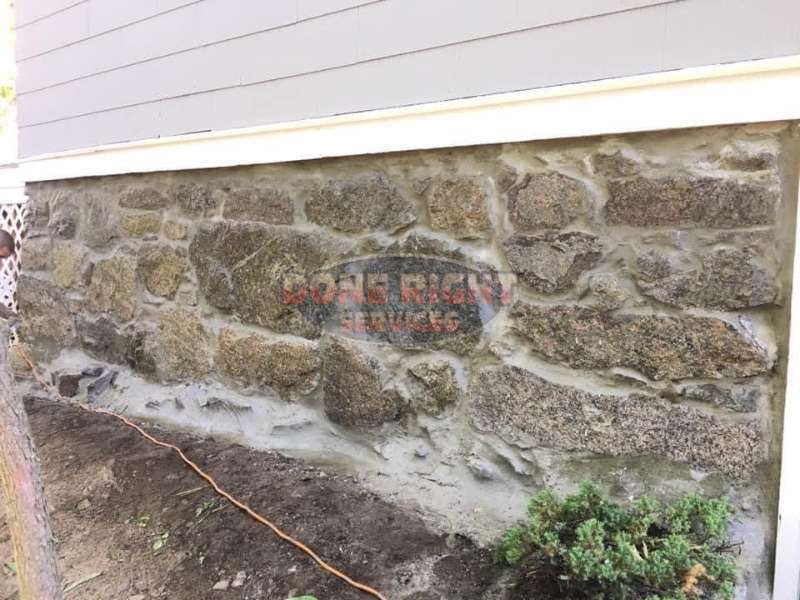
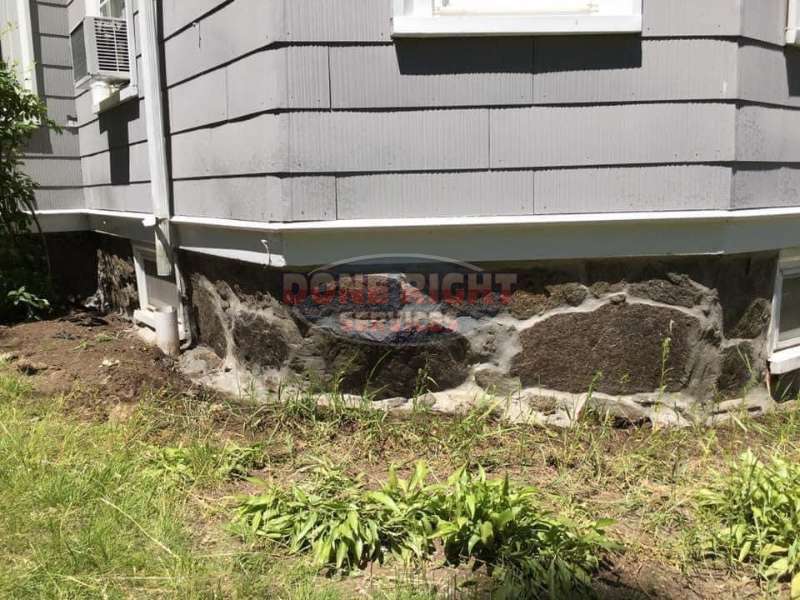
Stone foundation repointing is a specialized process that involves removing deteriorated mortar from between fieldstone blocks and replacing it with fresh, properly formulated mortar. This technique is essential for maintaining the structural integrity of older Massachusetts homes that feature fieldstone foundations. Over time, the mortar that holds these stones together breaks down due to exposure to freeze-thaw cycles, moisture infiltration, and natural settling of the structure.
Many Massachusetts homeowners own properties built over a century ago, and their original stone foundations have endured countless weather patterns. The mortar in these foundations can develop cracks, gaps, and crumbling sections that compromise the entire foundation’s effectiveness. A historic foundation repair project like repointing stone foundation in MA requires professional expertise and precision craftsmanship. Neglecting this maintenance allows water to penetrate the foundation, leading to basement dampness, mold growth, structural deterioration, and expensive repairs down the line.
Winter Damage Assessment and Spring Repair Urgency
Massachusetts winters are notoriously harsh, with repeated freeze-thaw cycles that wreak havoc on aging stone foundations. When water seeps into existing mortar cracks and freezes, it expands with tremendous force, widening the gaps and accelerating deterioration. By the time spring arrives, many homeowners discover significant new damage to their fieldstone foundation repair needs that was not visible in the previous fall.
Spring provides the perfect opportunity to assess winter damage while addressing previously known issues. The warmer temperatures make it safer and more practical for contractors to work on exterior foundation walls. Workers can stand on scaffolding without excessive cold wind and freezing conditions. The ground has thawed sufficiently for contractors to access the foundation perimeter without struggling through snow and ice. Additionally, spring rains, while sometimes inconvenient, are typically lighter and less severe than winter precipitation, allowing for adequate curing time for the new mortar between applications.
Homeowners who schedule their stone foundation repointing in Massachusetts during spring demonstrate wisdom in property maintenance planning. By addressing deterioration early, they prevent the compound damage that occurs when water infiltrates deeper into the foundation structure over subsequent seasons. A small investment in timely repairs prevents the exponential costs associated with major structural failures.
Ideal Weather Conditions for Mortar Curing
The success of any repointing stone foundation in MA project depends heavily on proper mortar curing conditions. Mortar needs specific temperature and humidity ranges to set correctly and achieve maximum strength. Spring weather in Massachusetts typically provides these ideal conditions, though late spring is preferable to early spring.
Mortar cures best when temperatures remain between 50 and 85 degrees Fahrenheit. Too-cold temperatures slow the curing process dramatically or prevent proper set altogether. Too-hot temperatures cause rapid surface drying while the interior remains soft, resulting in weak mortar that will fail prematurely. Spring temperatures in Massachusetts, particularly mid-April through May, fall perfectly within the optimal range for mortar curing.
Additionally, spring moisture levels support proper curing without creating problems. While the mortar needs some moisture to cure correctly, excessive wetness prevents proper setup. Spring weather provides a balance of moisture and drying periods that contractors can manage effectively. Summer heat can be problematic because the intense sun causes rapid surface drying while also potentially drying the mortar too quickly to achieve full strength development.
Contractors specializing in historic foundation repair in Massachusetts understand these nuances and plan their projects accordingly. They avoid winter scheduling when cold temperatures interfere with curing, and they plan carefully during summer months to work during early morning and late afternoon hours when temperatures are more moderate.
Contractor Availability and Project Planning
Spring is the busy season for masonry contractors throughout Massachusetts, but this also means that experienced specialists are more readily available than during other seasons. Contractors who handle historic foundation repair projects tend to schedule their work strategically, and spring booking fills up quickly. Homeowners who call for estimates in March or early April can often secure appointments and schedule work before the peak summer construction season consumes all available capacity.
The repointing stone foundation in MA specialists understand that spring offers the best market conditions for this type of work. They stock necessary materials, schedule experienced masons, and prepare their equipment for the intensive work that proper stone foundation repointing requires. Waiting until summer or fall means competing with other homeowners for limited contractor availability and potentially accepting less experienced workers or longer project timelines.
Moreover, contracting in spring allows homeowners to complete their projects before summer events like family vacations, outdoor entertaining, or seasonal travel plans. Finishing the work before hot weather arrives also means the new mortar has adequate time to cure fully before fall rains begin washing over the completed work. A foundation repaired in May will have fully hardened mortar by September, providing maximum protection against autumn weather.
Protecting Your Massachusetts Home Investment
Historic foundation repair in Massachusetts represents a significant investment, but it is an absolutely necessary one for homeowners committed to property preservation. A stone foundation in good condition protects everything above it, including the entire structure’s integrity. Water infiltration through deteriorated mortar causes cascading problems: wet basements, foundation rot, structural settling, and damage to the home’s lowest levels.
Spring scheduling for stone foundation repointing in Massachusetts allows homeowners to address problems before they compound. Moisture that seeps through deteriorated mortar during winter snow melt and spring rains can cause mold growth that spreads throughout basement spaces and creates health hazards. This same moisture promotes wood rot in sill plates, joists, and other wooden structural members in contact with the foundation. The expense of repointing becomes negligible compared to costs of replacing rotted wood structural members or remediating mold contamination.
Fieldstone foundation repair represents preventative maintenance that protects a home’s resale value and livability for years to come. A properly maintained stone foundation demonstrates to potential buyers that the home has been cared for responsibly. Insurance companies view properties with well-maintained foundations more favorably. Property appraisers recognize that a sound foundation supports a sound overall structure.
Conclusion
Spring is unquestionably the best season for scheduling stone foundation repointing in Massachusetts. The weather conditions support proper mortar curing, contractor availability peaks during this season, and winter damage becomes clearly visible as snow melts. Homeowners with aging stone foundations should contact qualified specialists now to schedule consultations and plan their historic foundation repair projects. Acting during spring weather protects homes from further deterioration while taking advantage of ideal working conditions that ensure quality results and long-lasting repairs.
Need The Best Foundation Crack Repair Specialist Near You?
At Done Right Services, we’ve been the trusted name in masonry since 1998, offering top-notch stone foundation repairs, crack repairs, and basement waterproofing throughout Massachusetts and New Hampshire. Our team of experts is dedicated to restoring your home’s foundation and ensuring your basement stays dry and safe. With our lifetime warranty and 15-year money-back guarantee on all concrete foundation services, you can trust that we’ll handle your needs with precision and care. Don’t let water leaks or foundation issues damage your home—reach out to us and experience the Done Right difference today!
If you own a home in Massachusetts or New Hampshire with a stone foundation, you’ve likely heard about repointing and waterproofing as two critical maintenance solutions. But what’s the real difference between these two foundation repair approaches? More importantly, which one does your stone foundation actually need? Understanding the distinction between stone foundation repointing vs waterproofing is essential for protecting your home’s structural integrity and avoiding costly water damage down the road.
Many homeowners confuse these two processes, but they serve very different purposes when it comes to foundation repair. Repointing addresses the mortar joints between stones, while waterproofing creates a moisture barrier. Both are important for Massachusetts and New Hampshire stone foundations, but the right choice depends on your specific situation.
Stone Foundation Repointing
Repointing is the process of removing old, deteriorating mortar from between the stones of your foundation and replacing it with fresh mortar. Over decades, mortar naturally breaks down due to freeze-thaw cycles, moisture infiltration, and age. This is especially common in older New England homes where stone foundation services have been neglected for years.
When mortar deteriorates, water can penetrate the spaces between stones. This leads to serious problems including foundation instability, interior water intrusion, and structural damage. The repointing process involves carefully removing the damaged mortar to a specific depth, typically about 2.5 times the mortar joint width. Once removed, new mortar is packed into the joints to create a tight seal.
The benefits of repointing extend beyond just stopping water. A proper repointing job restores structural integrity to your stone foundation. The mortar acts as a binder holding the stones together, distributing loads evenly. When mortar fails, individual stones can shift, creating uneven settlement and cracks. Professional stone foundation services in MA and NH will match the original mortar composition to ensure compatibility and longevity.
One advantage of repointing is that it’s highly visible. You can see the improved appearance of your foundation walls after the work is completed. Many homeowners find that repointing also improves the aesthetic appeal of their stone foundations, revealing the natural beauty of the stones underneath.
The Role of Waterproofing in Basement Moisture Repair
Waterproofing takes a different approach to foundation protection. Instead of addressing the mortar joints, waterproofing creates a protective barrier on the foundation surface to prevent water from entering the foundation system. This is a critical component of basement moisture repair in Massachusetts and New Hampshire, where heavy rains and snowmelt create significant moisture pressure against foundation walls.
There are several waterproofing methods available. Exterior waterproofing involves excavating around the foundation and applying a moisture-resistant coating or membrane to the outside walls. Interior waterproofing uses sealers applied to the inside surface. Some homes benefit from interior drainage systems that collect and redirect water away from the foundation.
Waterproofing is particularly important if you have active water intrusion, efflorescence (white mineral deposits), or dampness in your basement. These signs indicate that water is currently penetrating your foundation, and a waterproofing solution may be more immediately necessary than repointing.
The advantage of waterproofing is that it can be done relatively quickly without the extensive labor required for repointing. Exterior waterproofing, while more invasive initially, often provides longer-lasting protection because it addresses water before it reaches the foundation surface. Interior waterproofing offers a less disruptive option when exterior access is limited.
How Climate Affects Your Decision in MA and NH
The climate in Massachusetts and New Hampshire significantly impacts which foundation repair solution you’ll need. New England’s freeze-thaw cycles are particularly brutal on stone foundations. Water seeps into mortar joints, freezes, expands, and breaks the mortar apart. This cycle repeats year after year, progressively weakening the mortar.
Repointing becomes increasingly necessary as mortar reaches the end of its lifecycle, typically 25 to 30 years depending on mortar quality and weather exposure. In Massachusetts and New Hampshire, older homes with original mortar often need repointing to maintain structural integrity.
Waterproofing, meanwhile, becomes essential because of the tremendous amount of moisture these regions receive. Spring snowmelt combines with April and May rains to create significant hydrostatic pressure against foundation walls. Basements in MA and NH frequently experience moisture problems that waterproofing can effectively prevent.
The best approach for many New England homeowners involves both solutions. First, assess the condition of your mortar. If it’s failing, repointing should be your priority. Once the mortar is restored, adding waterproofing provides additional insurance against the region’s heavy moisture.
Assessing Your Foundation’s Actual Needs
Determining whether your stone foundation needs repointing or waterproofing requires careful inspection. Look for several warning signs that indicate repointing is necessary. Visible gaps in mortar joints, missing mortar, or mortar that crumbles when touched all suggest repointing is overdue. Water leaking along mortar lines during heavy rains indicates moisture is finding its way through deteriorated mortar.
Signs that waterproofing is needed include consistently damp basement walls, active water intrusion, efflorescence, mold growth, or a musty smell. If water is actively entering your basement despite intact mortar, waterproofing should be your focus. Water stains on the lowest portions of foundation walls also suggest moisture pressure from outside requires waterproofing solutions.
Foundation repair professionals in Massachusetts and New Hampshire can assess your specific situation. They can determine mortar condition using specialized tools and can identify the source of any moisture problems. Many homes need both services, but the sequencing matters. Repoint first to ensure structural integrity, then waterproof to protect against moisture.
Planning Your Foundation Repair Project
Once you’ve determined whether you need repointing, waterproofing, or both, planning becomes crucial. Repointing projects require significant labor and typically take longer than waterproofing installations. For extensive work, expect several weeks for a full stone foundation repointing. Waterproofing timelines vary depending on the method chosen.
Budget is another consideration. Repointing costs vary based on the foundation’s size and mortar condition, but typically range from several thousand to tens of thousands of dollars for complete work. Waterproofing costs depend on whether you choose interior or exterior solutions and the foundation’s square footage.
Weather timing matters in Massachusetts and New Hampshire. Late spring through early fall offers the best window for exterior work. Waterproofing applications also work best in dry conditions to ensure proper adhesion. Plan your foundation repair during favorable weather when possible.
Consider getting multiple quotes from stone foundation services in MA and NH. Experienced contractors will provide detailed assessments and recommendations based on your foundation’s actual condition rather than simply selling the more expensive option.
Conclusion
Both repointing and waterproofing serve essential functions for stone foundations in Massachusetts and New Hampshire. Repointing addresses structural integrity by replacing failed mortar, while waterproofing prevents water intrusion. Assess your foundation’s condition carefully, consult with experienced professionals, and plan accordingly. Many homes benefit from both services, applied in the right sequence, to ensure long-term protection and stability.
Need The Best Foundation Crack Repair Specialist Near You?
At Done Right Services, we’ve been the trusted name in masonry since 1998, offering top-notch stone foundation repairs, crack repairs, and basement waterproofing throughout Massachusetts and New Hampshire. Our team of experts is dedicated to restoring your home’s foundation and ensuring your basement stays dry and safe. With our lifetime warranty and 15-year money-back guarantee on all concrete foundation services, you can trust that we’ll handle your needs with precision and care. Don’t let water leaks or foundation issues damage your home—reach out to us and experience the Done Right difference today!
Summer storms can be relentless in New England, and they often expose vulnerabilities in older homes. If you own a property with a stone foundation, now is the time to assess whether repointing foundation cracks has become necessary. One of the most common issues homeowners face is deteriorating mortar foundation conditions that worsen when heavy rains arrive. Understanding the warning signs can help you avoid costly damage and protect your investment before the severe weather season begins.
1. Visible Cracks and Gaps in the Mortar
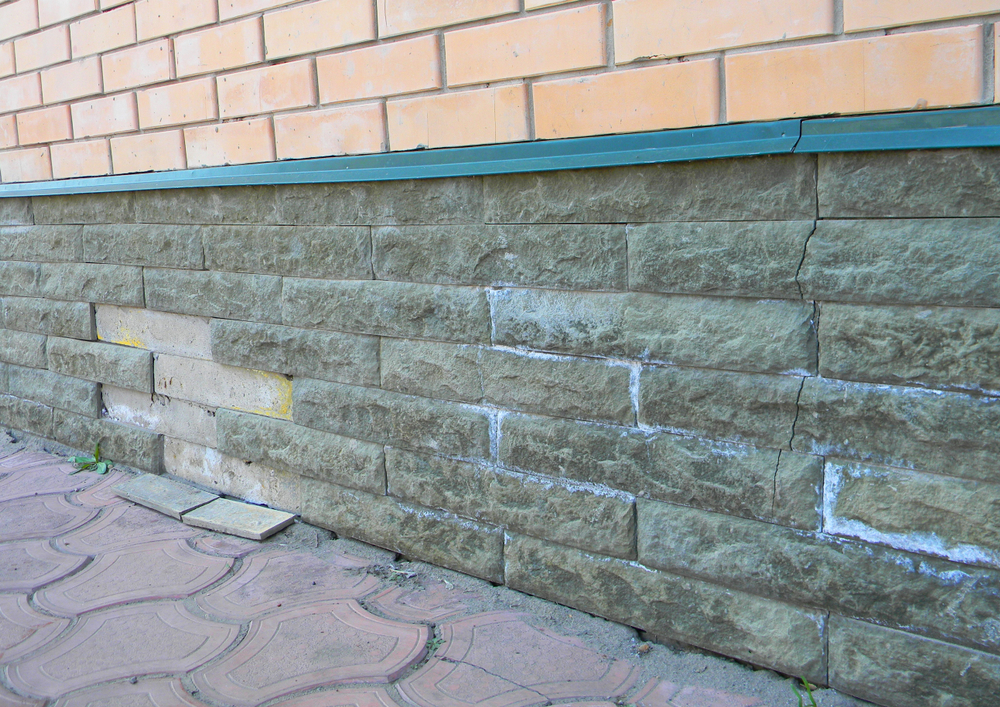
The most obvious indicator that you need stone foundation repair is the presence of visible cracks and gaps between the stones. Mortar deteriorates over time due to exposure to moisture, freeze-thaw cycles, and general weathering. In Massachusetts and NH, these conditions are particularly harsh during winter months, which accelerates the deterioration process.
When inspecting your foundation, look for gaps where the mortar should be binding the stones together. Even small cracks can become significant problems. Water seeps into these openings during heavy rains, and when temperatures drop, that water freezes and expands. This expansion pushes the stones apart, creating larger gaps and weakening the structural integrity of your entire foundation.
If you notice gaps wider than one-quarter inch, you should seriously consider professional stone foundation repair before summer storms hit. The longer you wait, the more expensive the repairs become. Foundation repair before summer storms is not just about aesthetics; it is about preventing water intrusion that could lead to basement flooding or structural compromise.
2. Water Seepage and Dampness in the Basement
Water entering your basement through the foundation is a clear sign that repointing foundation cracks is overdue. During spring and early summer, increased rainfall combined with melting snow creates ideal conditions for water to find its way through deteriorating mortar. In New England, where storms can bring several inches of rain in a single event, this problem becomes critical.
If you notice damp patches on your basement walls or a musty smell, investigate whether water is coming through the foundation. Some homeowners in MA find that their basements stay relatively dry most of the year but become problematic during heavy rain events. This pattern suggests that your mortar has weakened enough to allow water penetration under pressure.
Not only does water damage compromise the foundation itself, but it also creates conditions for mold growth and structural rot in wooden components of your home. The cost of remediation increases dramatically once mold becomes established. Addressing deteriorating mortar foundation conditions now prevents these cascading problems.
3. Mortar Crumbling or Powdering Easily
Run your finger along the mortar lines of your stone foundation. If the mortar crumbles easily or leaves a powder residue on your hand, it indicates that the binding material has lost its structural integrity. This condition is particularly common in older homes throughout NH and Massachusetts where stone foundations were built many decades ago.
Old lime mortar, which was standard in historical construction, breaks down gradually over time. When mortar reaches this crumbling stage, it no longer effectively holds the stones together or prevents water infiltration. This is the point where stone foundation repair becomes urgent rather than preventative.
The powdering effect you notice is the mortar literally disintegrating. Wind and rain accelerate this process, and by summer, the situation may worsen significantly. Before the season brings thunderstorms and heavy downpours, having a professional assess and potentially begin repointing foundation cracks makes sense.
4. Bulging or Bowing Stone Walls
When the mortar fails completely, the hydrostatic pressure from surrounding soil can cause stone walls to bulge or bow outward. This is an advanced stage of foundation failure and should be addressed immediately. If your basement walls show visible outward movement or bowing, do not delay in seeking professional assessment.
Bulging walls indicate that the mortar is no longer holding the stones in proper alignment. Water pressure behind the walls compounds the problem. In severe cases, this can lead to partial or complete foundation failure. MA homeowners with stone foundations in flood-prone areas should be especially vigilant about this issue.
Even minor bowing is concerning. While some stone foundations may shift slightly over a century or more, noticeable bowing suggests active deterioration. Before summer storms arrive with their potential for flooding and sustained water pressure, have a qualified contractor evaluate the extent of the damage and determine whether repointing foundation cracks or more extensive repair is necessary.
5. Pest and Insect Entry Points
Deteriorating mortar creates entry points for insects, rodents, and other pests. If you notice increased pest activity in your basement, especially as spring arrives, check your foundation for gaps and cracks. Stone foundation repair addresses not only structural integrity but also prevents unwanted wildlife from entering your home.
Insects like carpenter ants and termites can cause additional damage beyond what the compromised mortar already allows. These pests can spread to wooden framing and other structural elements, compounding your repair costs. In New England, where pest pressure increases as temperatures warm, this concern becomes more acute heading into summer.
The gaps that allow insects to enter also allow cold air to penetrate in winter and cool conditioned air to escape in summer. Proper repointing foundation cracks improves your home’s energy efficiency while also preventing pest intrusion. This dual benefit makes foundation repair before summer storms not just a structural necessity but also a practical maintenance decision.
Taking Action Now
The season of intense weather is approaching rapidly across New England. Stone foundation repair and repointing foundation cracks are not quick projects, and reputable contractors often have busy schedules heading into summer. If you suspect your foundation needs attention, schedule a professional inspection now rather than waiting until after storm damage occurs.
A qualified contractor can assess the extent of deteriorating mortar foundation conditions and recommend appropriate solutions. Some repairs may require only cosmetic repointing, while others might need more extensive reconstruction. The cost varies significantly based on the extent of damage, the size of the foundation, and the complexity of the work.
Getting ahead of the problem is far more cost-effective than dealing with water damage, mold remediation, or structural repairs after a major storm. Many homeowners in Massachusetts and NH who address stone foundation repair proactively find that they avoid far more expensive problems down the road.
Conclusion
Your stone foundation is critical to your home’s structural integrity and safety. The warning signs discussed here, from visible cracks to water seepage to crumbling mortar, indicate that stone foundation repair is needed before summer storms arrive. Take action now to protect your home and avoid emergency repairs after weather damage occurs.
Need The Best Foundation Crack Repair Specialist Near You?
At Done Right Services, we’ve been the trusted name in masonry since 1998, offering top-notch stone foundation repairs, crack repairs, and basement waterproofing throughout Massachusetts and New Hampshire. Our team of experts is dedicated to restoring your home’s foundation and ensuring your basement stays dry and safe. With our lifetime warranty and 15-year money-back guarantee on all concrete foundation services, you can trust that we’ll handle your needs with precision and care. Don’t let water leaks or foundation issues damage your home—reach out to us and experience the Done Right difference today!
If you own an older home in Massachusetts, you already know winter does not leave quietly. Snow piles up, temperatures swing from below freezing to mild afternoons, and by early spring, you start noticing small changes around your home. Maybe a hairline crack in the basement wall looks wider than it did in the fall. Maybe you spot dampness along a foundation seam after the snow melts. These are not random occurrences. They are often the result of freeze-thaw cycles doing what they have done to New England homes for generations.
For homeowners between 35 and 70 living in older properties throughout Amesbury, Georgetown, and surrounding communities, understanding freeze thaw foundation damage in Massachusetts is essential. Seasonal shifts are part of life here, but foundation cracks do not have to become permanent problems. With the right diagnosis and repair strategy, you can protect your home from long-term structural issues and recurring water intrusion.
How Freeze-Thaw Cycles Impact New England Foundations
New England weather is uniquely demanding on foundations. During winter, moisture seeps into small pores and hairline cracks in concrete. When temperatures drop below freezing, that trapped water expands. As it freezes, it exerts pressure against the surrounding material. When temperatures rise again, the ice melts, and the cycle repeats.
Over the course of several months, this repeated expansion and contraction creates stress within foundation walls. Even well-built homes in Amesbury and Georgetown are vulnerable to seasonal foundation movement in New England. The soil surrounding the foundation also plays a role. Wet soil expands when frozen and contracts when thawed, pushing and pulling against basement walls.
Older properties are especially susceptible because materials may already show signs of aging. Mortar joints weaken over time, and concrete naturally develops small fissures as it cures and settles. Freeze-thaw cycles simply exploit these existing vulnerabilities. That is why many homeowners first notice basement wall cracks in Georgetown, MA or nearby areas shortly after winter ends.
What Types of Foundation Cracks Should You Expect
Not all foundation cracks are created equal. Some are cosmetic and pose little structural risk. Others signal more significant movement or stress. Knowing what to expect helps you respond appropriately.
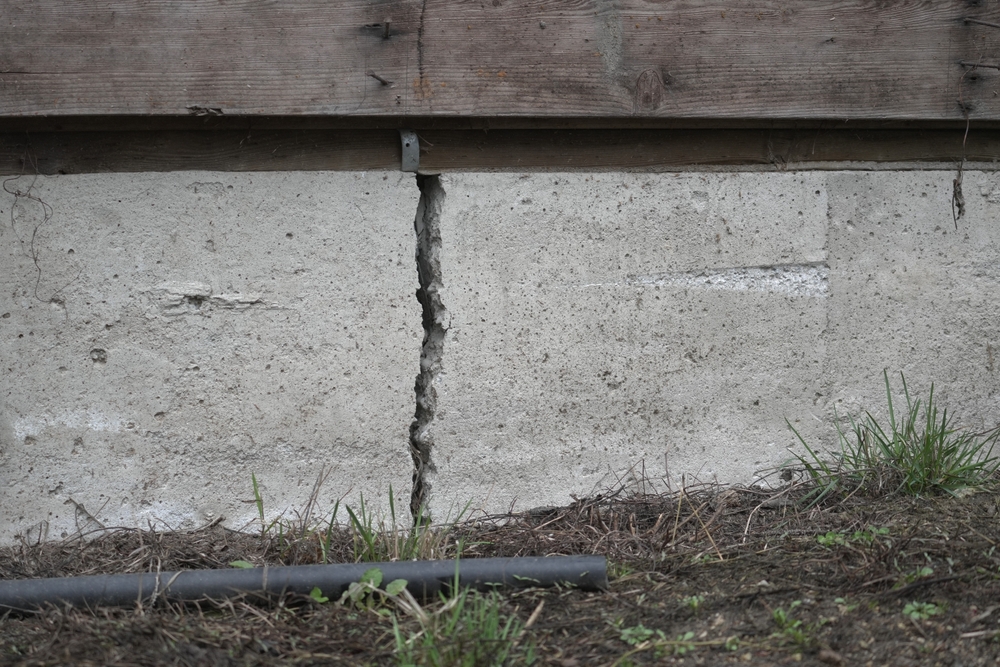
Hairline vertical cracks are common in poured concrete foundations. These often result from normal settling and shrinkage during the curing process. While they may widen slightly during winter due to freeze-thaw expansion, they are not always structurally dangerous. However, they can still allow water to enter if left untreated.
Horizontal cracks are more concerning. They may indicate pressure from expanding soil against the exterior wall. In regions with pronounced seasonal foundation movement in New England, repeated freeze-thaw cycles can intensify that lateral pressure. Stair-step cracks in block foundations also deserve attention, as they may suggest uneven settlement or shifting soil conditions.
The key difference lies in whether the crack is structural or non-structural. Structural cracks often involve displacement, bowing, or noticeable shifting of the wall. Non-structural cracks may simply reflect surface-level expansion without compromising overall stability. Accurate diagnosis is critical, which is why professional evaluation is so important before pursuing foundation crack repair in Amesbury, MA.
Why Seasonal Expansion Often Leads to Water Seepage
Even small cracks can allow water intrusion. As snow melts in late winter and early spring, groundwater levels rise. Saturated soil increases hydrostatic pressure against foundation walls. If cracks widened during winter, they create an easy path for moisture to enter the basement.
Homeowners frequently report damp spots, minor puddling, or efflorescence along basement walls after thaw periods. Basement wall cracks in Georgetown, MA and surrounding towns often become visible during these wetter months because moisture highlights them.
Repeated freeze thaw foundation damage in Massachusetts can gradually enlarge small openings, making seasonal water seepage more frequent and more severe. While it may begin as a minor nuisance, over time it can lead to mold growth, damaged finishes, and reduced indoor air quality. Addressing cracks promptly not only protects structural integrity but also prevents ongoing moisture issues.
Diagnosing Structural vs. Non-Structural Cracks
One of the most important steps in protecting your home is understanding whether a crack is purely cosmetic or structurally significant. This distinction determines the appropriate repair method and long-term strategy.
Foundation Crack Repair specializes in diagnosing structural vs. non-structural cracks with precision. Rather than applying a one-size-fits-all solution, experienced technicians assess crack patterns, wall alignment, and surrounding soil conditions. They look for signs of bowing, offset edges, and repeated seasonal widening that may indicate deeper movement.
Non-structural cracks are often ideal candidates for interior crack injection systems. These advanced repair methods involve injecting specialized materials into the crack from inside the basement, creating a watertight seal that bonds the concrete back together. Interior injection avoids extensive exterior excavation and provides an effective barrier against water intrusion.
Structural cracks, on the other hand, may require additional stabilization measures depending on severity. The goal is always long-term performance, especially in climates where seasonal foundation movement in New England is a recurring reality. By identifying the root cause rather than just sealing the surface, homeowners gain confidence that repairs will withstand future winters.
Long-Term Solutions Designed for Freeze-Thaw Environments
Because Massachusetts experiences annual freeze-thaw cycles, repairs must be built to endure those conditions. Quick patches or temporary sealants rarely provide lasting protection. Long-term waterproofing solutions are essential.
Foundation Crack Repair focuses on interior crack injection systems specifically designed for freeze-thaw environments. These systems remain flexible enough to accommodate minor seasonal movement while maintaining a watertight seal. This flexibility is critical in areas where temperature swings are common.
In addition to crack injection, comprehensive waterproofing strategies may include addressing drainage concerns around the foundation. Redirecting water away from the home reduces hydrostatic pressure and minimizes stress on basement walls. Combining crack repair with moisture management creates a more resilient foundation overall.
For homeowners considering foundation crack repair in Amesbury, MA, working with a team that understands regional climate patterns makes a meaningful difference. Local expertise ensures that repair materials and techniques are selected with New England’s demanding weather in mind.
What Homeowners Should Do This Spring
As winter gives way to spring, take time to inspect your basement carefully. Look for new cracks, widening seams, or signs of dampness. Pay attention to areas where water may have entered during snow melt. Document changes so you can compare them year to year.
If you notice seasonal crack expansion or water seepage, do not assume it will resolve on its own. Freeze thaw foundation damage in Massachusetts tends to progress gradually. What begins as a hairline crack can widen over several seasons if left untreated.
Consulting professionals who specialize in diagnosing and repairing foundation cracks ensures that you receive an accurate assessment. Foundation Crack Repair provides expert evaluation and tailored solutions, from interior injection systems to long-term waterproofing approaches. Their experience with basement wall cracks in Georgetown, MA, and surrounding communities allows them to anticipate the specific challenges posed by seasonal foundation movement in New England.
Owning an older home in Massachusetts means embracing history and character, but it also means staying proactive about maintenance. Freeze-thaw cycles are part of life here, yet foundation cracks do not have to define your home’s future. With informed expectations, early diagnosis, and repair systems designed for our climate, you can protect your foundation from recurring seasonal damage and enjoy greater peace of mind year after year.
If you own a home in Boston, MA, there is a good chance you have peered into your basement at some point and noticed something unsettling: cracks running along your foundation walls. You are not alone. Foundation crack repair is one of the most common services requested by homeowners across the city, and for good reason. Boston’s geology, climate, and housing stock create a perfect storm of conditions that make foundation problems nearly inevitable over time. The good news is that understanding why these cracks happen is the first step toward getting them fixed correctly.
The Unique Geology and Climate Behind Boston’s Foundation Problems
Boston sits on a complicated mix of bedrock, clay, fill, and made land, much of it deposited or engineered over centuries of urban development. Many neighborhoods, including the Back Bay and the South End, were literally built on filled marshland and tidal flats. This means the soil beneath countless Boston homes is inherently unstable and prone to shifting, settling, and compressing unevenly under the weight of a structure.
Add to this the brutal New England freeze-thaw cycle, and you have a recipe for persistent foundation stress. Every winter, moisture in the soil surrounding your basement foundation freezes and expands, pushing against foundation walls with tremendous force. When spring arrives, that pressure releases, only to return again the following season. Over years and decades, this repeated cycle causes basement foundation cracks in Boston homes that range from minor cosmetic fissures to serious structural fractures.
Hydrostatic pressure is another major culprit. Boston receives significant annual rainfall, and when that water saturates the soil around your foundation, it presses inward with constant force. Without proper drainage, that pressure has nowhere to go except into your walls, gradually widening existing cracks and creating new ones.
Why Historic Homes Face Especially Serious Foundation Challenges
Boston is one of the oldest cities in the United States, and a significant portion of its housing stock dates back to the 18th, 19th, and early 20th centuries. Historic home foundation repair in Boston is a specialized field precisely because older structures were built using materials and methods that behave very differently from modern construction.
Many Victorian-era triple-deckers, brownstones, and colonial homes in neighborhoods like Dorchester, Jamaica Plain, Roxbury, and Charlestown were built on rubble stone or brick foundations. Stone foundation crack repair in Boston requires a fundamentally different approach than repairing poured concrete, because the mortar holding individual stones together deteriorates over time, becomes water-permeable, and eventually fails entirely. When the mortar joints between stones crumble, the structural integrity of the entire wall can be compromised.
Beyond the materials themselves, these older foundations were never designed to handle modern loads. Many historic Boston homes have been converted into multi-family dwellings, had additions built onto them, or had their interiors renovated in ways that changed how weight is distributed. A foundation that held up a single-family home in 1890 may struggle under the demands of a renovated three-unit building in the 21st century. This is why a qualified contractor who specializes in historic home foundation repair in Boston is so important; they understand not just the crack itself, but the broader context of how the building has evolved over time.
How to Tell a Cosmetic Crack from a Structural One
Not every crack you see in your basement foundation is cause for alarm, but learning to distinguish between cosmetic and structural issues can save you both money and stress. Foundation crack repair in Boston, MA starts with an accurate diagnosis, and that requires knowing what you are looking at.
Hairline cracks that run vertically and are less than 1/16 of an inch wide are often the result of normal concrete curing or minor settling. They may be unsightly, but they rarely indicate a serious problem. Horizontal cracks, on the other hand, are among the most concerning types you can find in basement foundation cracks in Boston homes. A horizontal crack running across a block or poured concrete wall typically signals lateral pressure from the surrounding soil, which means the wall itself may be bowing inward. This is a structural issue that requires prompt attention.
Diagonal cracks that run at roughly 45-degree angles often point to differential settling, meaning one part of your foundation is sinking faster than another. Stair-step cracks in brick or stone foundations follow the mortar joints and are also associated with settling or frost heave. Any crack that is wider at one end than the other, or that appears to be actively growing, should be evaluated by a professional as soon as possible.
Water intrusion is another important signal. If you see efflorescence (the white, chalky mineral deposits left behind when water evaporates through concrete) or if water is actively seeping through a crack after rain, that crack has become a pathway for moisture, regardless of whether it is structurally significant.
What Proper Foundation Crack Repair Actually Looks Like in Boston
The repair method depends entirely on the type of crack, the foundation material, and the underlying cause. One of the most important things homeowners should understand is that sealing a crack from the interior with hydraulic cement or epoxy is rarely a complete solution on its own. Proper foundation crack repair in Boston, MA addresses both the symptom and the cause.
For poured concrete foundations with non-structural vertical cracks, polyurethane foam injection is often the preferred method. The foam expands to fill the crack completely, creating a flexible, waterproof seal that moves slightly with the foundation rather than cracking under pressure. Epoxy injection is better suited for structural cracks where you need to restore tensile strength to the concrete itself, as cured epoxy is actually stronger than the surrounding concrete.
Stone foundation crack repair in Boston typically involves repointing the mortar joints throughout the affected area, not just patching individual cracks. Repointing means carefully removing deteriorated mortar to a sufficient depth and replacing it with a new mortar mix that is appropriate for the age and composition of the stone. Using the wrong mortar mix in a historic stone foundation can actually accelerate damage, which is why working with an experienced contractor matters so much.
For horizontal cracks or bowing walls, carbon fiber straps or steel I-beam reinforcements are often installed to stabilize the wall and prevent further movement. In severe cases, wall anchors may be driven into the surrounding soil to counteract lateral pressure. These repairs are more invasive and expensive, but they are the only reliable solution when the structural integrity of the wall is at stake.
Exterior waterproofing, improved drainage, and the installation of a sump pump system are frequently recommended alongside crack repair to address the underlying causes of water infiltration and soil pressure. A crack that is repaired without addressing drainage issues will likely return.
How to Choose the Right Contractor for the Job
Selecting a contractor for basement foundation cracks in Boston homes is a decision that deserves careful thought. Look for a company with specific experience in the Boston area, because local knowledge of soil conditions, frost depths, and the particular challenges of historic New England construction is genuinely valuable. Ask to see examples of similar projects, and do not hesitate to request references from past customers.
Any reputable contractor should begin with a thorough inspection before recommending a repair method. Be cautious of anyone who offers a quick quote without examining your foundation in person, or who recommends the same solution for every crack regardless of type or cause.
Conclusion
Boston homes are built on complicated ground, shaped by centuries of history, challenging soils, and a relentless climate. Foundation cracks are a predictable consequence of those conditions, but they are not a death sentence for your home. Whether you are dealing with a new hairline crack in a poured concrete wall or crumbling mortar in a 19th-century stone foundation, the right repair approach exists. Foundation crack repair in Boston, MA is most effective when it is tailored to the specific material, the type of crack, and the forces driving it. Getting that diagnosis right, and choosing a contractor who understands the full picture, is what separates a lasting repair from a temporary patch.
Need The Best Foundation Crack Repair Specialist Near You?
At Done Right Services, we’ve been the trusted name in masonry since 1998, offering top-notch stone foundation repairs, crack repairs, and basement waterproofing throughout Massachusetts and New Hampshire. Our team of experts is dedicated to restoring your home’s foundation and ensuring your basement stays dry and safe. With our lifetime warranty and 15-year money-back guarantee on all concrete foundation services, you can trust that we’ll handle your needs with precision and care. Don’t let water leaks or foundation issues damage your home—reach out to us and experience the Done Right difference today!