Spring in New Hampshire is a season of dramatic transformation. Snow melts from the White Mountains, rivers swell, and rainfall arrives in relentless waves across the Granite State. For homeowners, this annual shift brings more than mud and blooming wildflowers. It brings a serious test of your home’s foundation waterproofing. If your foundation has even the smallest vulnerability, heavy spring rains in NH will find it.
Understanding why this happens and what you can do about it can save you thousands of dollars and protect the long-term health of your home.
Why Spring Rainfall Is So Hard on New Hampshire Foundations
New Hampshire’s spring season creates a perfect storm of conditions that put enormous stress on residential foundations. The ground, frozen solid for months, begins to thaw from the top down. This thawing process leaves the deeper soil layers still impermeable for weeks, meaning that melting snow and heavy rainfall have nowhere to go except sideways and downward along the path of least resistance. That path often leads directly to your foundation walls.
The combination of snowmelt and spring precipitation in NH is particularly aggressive. Average spring rainfall totals across southern New Hampshire can push well past three inches per month during April and May, and years with heavier-than-average winters tend to produce even more saturated soil conditions. When the ground simply cannot absorb any more moisture, hydrostatic pressure builds against foundation walls. This pressure is relentless and surprisingly powerful. Over time, it forces water through hairline cracks, porous concrete, compromised mortar joints, and aging waterproofing membranes.
Many homeowners in New Hampshire only discover their foundation waterproofing has failed when they walk downstairs after a heavy rain and find water on the floor. By that point, the damage is already underway. Wet basement repair is significantly more expensive when left unaddressed, and the structural integrity of your foundation can deteriorate faster than most people realize.
Common Signs That Spring Rain Has Exposed a Foundation Problem
Recognizing the early warning signs of a foundation waterproofing failure is critical for NH homeowners. Water intrusion rarely announces itself loudly at first. Instead, it creeps in quietly and leaves behind clues that are easy to dismiss until the problem becomes impossible to ignore.
Efflorescence is one of the first signs many homeowners notice. This white, chalky residue on basement walls forms when water moves through concrete and carries dissolved minerals to the surface. On its own, efflorescence is not a structural crisis, but it tells you that water is actively moving through your foundation walls. In New Hampshire, you might see this appear or worsen significantly after the first heavy spring rains.
Musty odors in the basement are another red flag. Even when you cannot see standing water, a persistently damp smell indicates elevated moisture levels that can fuel mold and mildew growth. Mold thrives in wet, dark environments, and a basement with compromised foundation waterproofing provides exactly that. NH homeowners sometimes attribute these smells to old construction or seasonal humidity without realizing water intrusion is the actual cause.
Visible cracks in foundation walls or floors deserve immediate attention. Horizontal cracks in block or poured concrete walls are especially serious because they can indicate lateral pressure from soil. Vertical or stair-step cracks, while sometimes less urgent, still provide an entry point for water. During spring in NH, these cracks can allow significant water infiltration in just a single storm event.
Standing water or persistent damp spots on basement floors after rain are obvious indicators of basement flooding risk. If you notice these issues only during or after heavy spring rainfall, your drainage and waterproofing systems are likely overwhelmed or failing. Wet basement repair should be scheduled before the problem escalates into full flooding.
Understanding Hydrostatic Pressure and Soil Saturation in NH
To truly appreciate why foundation waterproofing fails during spring in New Hampshire, it helps to understand the mechanics of hydrostatic pressure. When soil surrounding your foundation becomes saturated, water exerts outward and inward pressure in all directions. A cubic foot of water weighs over 62 pounds. Multiply that across an entire foundation wall surrounded by saturated soil, and the force pressing against your basement is immense.
New Hampshire’s soil composition varies significantly from region to region, and this affects how water drains during spring storms. Rocky, glaciated soils in northern NH may drain more quickly in some areas but create channeling effects that direct concentrated water flow toward structures. Clay-heavy soils in other parts of the state hold moisture far longer and maintain hydrostatic pressure against foundation walls for days or even weeks after a rain event ends.
Older homes throughout New Hampshire face additional challenges. Foundations built decades ago often lack the waterproof foundation solutions that modern construction standards require. Many older homes were built with no waterproofing membrane at all, relying on drainage conditions that may no longer exist due to landscaping changes, soil compaction, or nearby development. When spring rains arrive in full force, these older foundations are working against the water with no real defense in place.
Waterproof Foundation Solutions Available to NH Homeowners
The good news for homeowners across New Hampshire is that effective waterproof foundation solutions exist at a range of investment levels. The right approach depends on the severity of the problem, the age and construction of your foundation, and whether you need interior or exterior remediation.
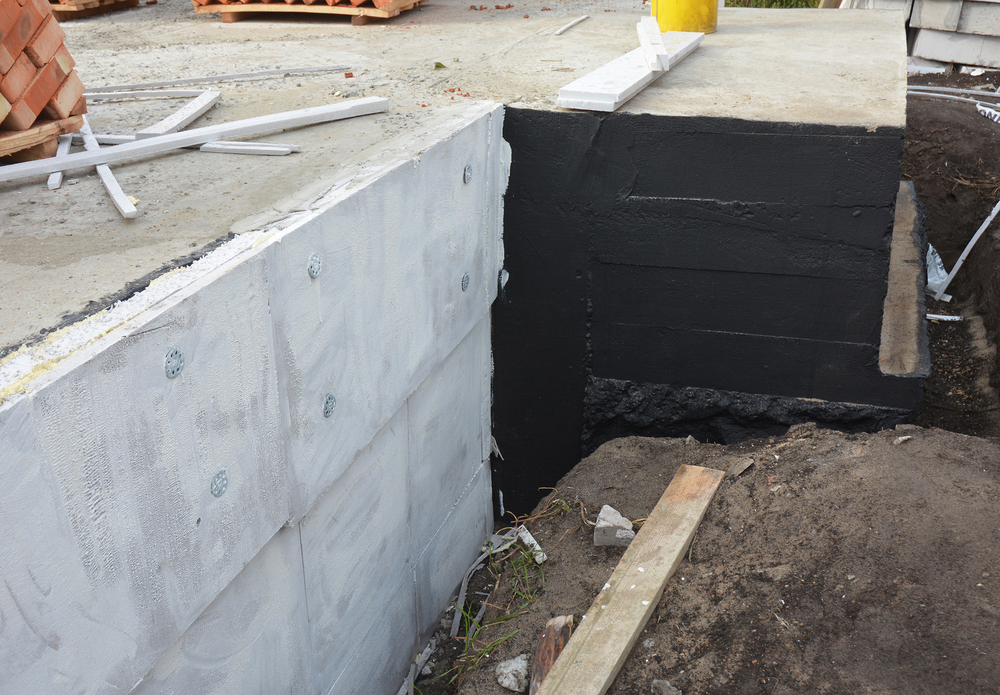
Exterior waterproofing is widely considered the most comprehensive long-term solution. This process involves excavating the soil around the foundation, applying a waterproofing membrane or coating directly to the exterior foundation walls, installing a drainage board to redirect water away from the structure, and improving or replacing the footing drain system. While exterior waterproofing requires more labor and upfront investment, it addresses the source of water intrusion before it ever reaches your foundation walls. For NH homeowners with serious or recurring basement flooding, this is often the most effective permanent fix.
Interior waterproofing systems offer a practical and effective alternative, particularly for homes where exterior excavation is impractical. Interior drainage channels are installed along the perimeter of the basement floor, directing water that does enter the space toward a sump pump system. Modern sump pumps with battery backup are essential in New Hampshire, where spring storms can knock out power while simultaneously driving heavy rainfall into vulnerable foundations. Interior systems do not stop water from entering the walls, but they manage it so effectively that wet basement repair is largely avoided.
Crack injection is another targeted solution for foundations suffering from specific entry points. Polyurethane or epoxy injection fills cracks from the inside, creating a flexible or rigid seal depending on the material used. This approach works well for isolated cracks but is not a substitute for comprehensive foundation waterproofing when widespread moisture intrusion is occurring.
Improving exterior grading and drainage around your home is a lower-cost first step that every NH homeowner should consider. Soil should slope away from the foundation at a grade of at least one inch per foot for the first six feet surrounding the structure. Downspout extensions should carry roof runoff well away from the foundation perimeter. These measures alone will not solve a serious waterproofing failure, but they reduce the volume of water pressing against your foundation during spring storms.
Conclusion
Spring rains in New Hampshire have a way of revealing what has been hidden all winter long. For homeowners, that often means coming face to face with foundation waterproofing failures that cannot wait another season. From understanding hydrostatic pressure to exploring waterproof foundation solutions suited to NH conditions, taking action before or immediately after problems appear is always the smarter and more affordable path. Whether you need targeted wet basement repair or a full exterior waterproofing system, addressing the issue now protects your home for every spring season ahead.
Need The Best Foundation Crack Repair Specialist Near You?
At Done Right Services, we’ve been the trusted name in masonry since 1998, offering top-notch stone foundation repairs, crack repairs, and basement waterproofing throughout Massachusetts and New Hampshire. Our team of experts is dedicated to restoring your home’s foundation and ensuring your basement stays dry and safe. With our lifetime warranty and 15-year money-back guarantee on all concrete foundation services, you can trust that we’ll handle your needs with precision and care. Don’t let water leaks or foundation issues damage your home—reach out to us and experience the Done Right difference today!
Even the toughest stone foundations need regular attention to keep performing at their best. One of the most important and often overlooked aspects of foundation maintenance is repointing, the process of removing deteriorated mortar from the joints between stones and replacing it with fresh material. When done correctly and on schedule, stone foundation repointing benefits your home in ways that go far beyond simple aesthetics.
Whether your home is in Worcester, Springfield, or a quiet town along the South Shore, understanding why repointing matters can save you from costly structural repairs down the road. This guide breaks down exactly how this process works, why it is so critical in our regional climate, and what homeowners across MA and NH can do to protect their investment for generations to come.
Why Stone Foundations in Massachusetts Face Unique Challenges
Massachusetts sits in a climate zone that is genuinely hard on building materials. The region experiences hot, humid summers and cold, snowy winters, which means stone foundations go through dozens of freeze-thaw cycles every single year. Water seeps into small cracks in the mortar, freezes overnight, expands, and then thaws the next afternoon. Over time, this cycle breaks down even well-installed mortar joints, leaving gaps that invite more moisture, more expansion, and more damage.
Older homes throughout MA were often built with lime-based mortars that, while flexible and breathable, do eventually wear out. In many cases, homeowners are living with mortar that is decades past its useful life without even realizing it. Once the mortar begins to fail, the stones themselves start shifting. Water infiltration becomes a real problem, leading to basement flooding, efflorescence (the white mineral deposits you see on stone walls), and in serious cases, structural instability.
In NH, similar challenges exist, particularly in the southern regions near the Massachusetts border, where the soil and climate conditions mirror those just a few miles south. Homeowners in both states share the same vulnerabilities and the same need for proactive foundation care.
The Core Stone Foundation Repointing Benefits You Should Know
So what exactly do you gain by investing in stone foundation repair through repointing? The benefits are both immediate and long-term, and they touch on everything from structural integrity to energy efficiency.
First and most importantly, repointing restores the mechanical bond between stones. The mortar is not just filler. It distributes the load across the entire foundation wall, ensuring that no single stone bears more pressure than it should. When mortar fails, that load distribution breaks down, and stress concentrates in ways the original builders never intended. Repointing brings balance back to the structure.
Second, fresh mortar dramatically reduces water infiltration. A properly repointed foundation acts as a barrier against the moisture that causes so much damage in New England basements. Less moisture means less mold, less efflorescence, and a drier, healthier living space. In Massachusetts, where spring rains and snowmelt put enormous pressure on foundation walls, this protection is not optional. It is essential.
Third, repointing improves energy efficiency. Gaps in mortar joints allow cold air to push through foundation walls and into your basement. During a Massachusetts winter, that translates directly into higher heating bills. Sealing those gaps with fresh mortar keeps conditioned air inside and outdoor air where it belongs.
Finally, stone foundation repointing benefits your property value. Buyers in the MA real estate market are increasingly aware of foundation issues, and a well-maintained stone foundation is a genuine selling point. A neglected one can derail an entire transaction.
How Repointing Helps You Extend Foundation Lifespan
The phrase “extend foundation lifespan” might sound like marketing language, but it reflects a straightforward reality. Stone foundations that receive regular maintenance simply last longer than those that do not. The stones themselves, in most cases, are not the problem. Granite, fieldstone, and similar materials used throughout Massachusetts and NH are incredibly durable. The mortar is the weak link, and when you address it consistently, you protect everything else.
Most experts recommend inspecting your foundation mortar every five to ten years, depending on your home’s age, exposure to moisture, and the type of mortar originally used. When soft spots, cracks, or missing sections are identified early, repointing is a relatively straightforward and affordable repair. When those issues are left alone, they compound. What started as a few inches of failed mortar becomes a compromised wall section, which eventually becomes a structural emergency requiring far more invasive and expensive intervention.
Homeowners in Massachusetts who commit to foundation maintenance on a regular schedule are essentially buying insurance against the most catastrophic and costly type of home repair there is. Foundation replacement or major structural reconstruction can run into tens of thousands of dollars. Repointing, by comparison, is a fraction of that cost and delivers outsized protection.
It is also worth noting that repointing with the correct mortar type matters enormously. Many older stone foundations in MA and NH were built with soft lime mortar, and repointing them with hard Portland cement can actually cause more damage than it prevents. The harder cement traps moisture and causes the stones themselves to crack over time. Working with a contractor who understands the specific demands of historic and older New England foundations is critical to getting lasting results.
Recognizing the Signs That Your Foundation Needs Attention
Not every homeowner knows what to look for when it comes to mortar deterioration, but there are several clear warning signs that it is time to call a professional for stone foundation repair.
Crumbling or recessed mortar is the most obvious indicator. If you can scrape mortar out of a joint with your finger or a key, it has lost its integrity and needs to be replaced. Visible gaps between stones, even small ones, are also a red flag, particularly if they are accompanied by staining or mineral deposits on the wall surface.
Interior moisture problems are another strong signal. If your basement regularly smells musty, shows signs of water intrusion along the walls, or develops efflorescence during wet seasons, failing mortar joints are a likely contributor. Similarly, if you notice stones that appear to be shifting, leaning, or bulging outward, the situation has progressed beyond routine maintenance and requires immediate professional evaluation.
In Massachusetts, it is especially important to perform a thorough inspection after a particularly harsh winter. The cumulative effect of a season’s worth of freeze-thaw cycles often reveals damage that was not visible in the fall. Catching these issues in the spring gives homeowners the full warm-weather season to schedule and complete repairs before cold temperatures return.
Homeowners in NH face the same seasonal rhythm and should adopt the same post-winter inspection habit as part of their annual home maintenance routine.
Conclusion
Stone foundation repointing is one of the most practical investments a homeowner in Massachusetts or NH can make. It protects against water infiltration, restores structural integrity, improves energy efficiency, and helps you extend foundation lifespan well beyond what neglect would allow. The stone beneath your home has already proven its durability across decades, sometimes centuries. With consistent foundation maintenance and timely stone foundation repair, it can continue doing its job for generations more. Do not wait for the cracks to grow or the water to find its way in. A proactive approach to repointing is the simplest and most cost-effective way to protect the place you call home.
Need The Best Foundation Crack Repair Specialist Near You?
At Done Right Services, we’ve been the trusted name in masonry since 1998, offering top-notch stone foundation repairs, crack repairs, and basement waterproofing throughout Massachusetts and New Hampshire. Our team of experts is dedicated to restoring your home’s foundation and ensuring your basement stays dry and safe. With our lifetime warranty and 15-year money-back guarantee on all concrete foundation services, you can trust that we’ll handle your needs with precision and care. Don’t let water leaks or foundation issues damage your home—reach out to us and experience the Done Right difference today!
Your stone foundation is one of the most important structural elements keeping your house standing. Over time, the mortar between those stones deteriorates, cracks, and crumbles, leaving gaps that allow water, pests, and cold air to enter. Repointing, which is the process of removing damaged mortar and replacing it with fresh material, is a necessary maintenance task. However, the type of mortar you choose matters enormously. Using the wrong mix can cause more damage than the original deterioration itself.
Proper mortar matching for stone foundations is not simply a cosmetic concern; it is a structural and preservation imperative for homeowners across MA and NH.
Why Mortar Matching Matters for Stone Foundations
Stone foundations built in Massachusetts and New Hampshire before the twentieth century were almost universally laid using lime-based mortars. These older formulations were softer and more flexible than modern Portland cement mixes. They were designed to work with the natural movement of stone, absorbing stress and allowing minor shifts without cracking the masonry units themselves.
When a contractor fills aged joints with modern cement mortar, a serious problem develops. The new material is significantly harder than the surrounding stone and the original lime mortar. Because stone and mortar expand and contract at different rates with temperature changes, and because New England winters are notoriously harsh, the rigid cement mortar has nowhere to flex. Instead of the mortar absorbing the stress, the force transfers directly into the stone itself, causing spalling, fracturing, and long-term structural weakening.
Correct mortar matching for stone foundations means analyzing the original mix and replicating its composition as closely as possible. This protects the integrity of the stones, preserves the historical character of the structure, and ensures that your foundation repair materials are compatible with what was already there.
Lime Mortar vs Cement Foundation: Understanding the Core Difference
The debate around lime mortar vs cement foundation repair is central to any repointing project on an older New England home. Understanding the properties of each material helps homeowners and contractors make informed decisions.
Lime mortar is composed of lime putty or hydraulic lime, sand, and water. It has been used in construction for thousands of years and was the standard for American masonry well into the early twentieth century. Its key properties include flexibility, breathability, and self-healing capacity. When hairline cracks develop in lime mortar, carbonation can actually allow the material to re-knit over time. It also allows moisture vapor to pass through the wall, which helps prevent the kind of trapped moisture that leads to efflorescence, freeze-thaw damage, and eventual structural failure.
Portland cement mortar became widely adopted in the mid-twentieth century and offers high compressive strength and fast curing times. For modern concrete block construction, it performs well. However, when applied to pre-twentieth century stone foundations in MA or NH, it creates a moisture trap. Water that enters the wall cannot escape through the hard cement joints, so it migrates into the stone itself and causes internal damage with every freeze-thaw cycle.
For most historic stone foundations across Massachusetts and New Hampshire, a hydraulic lime mortar or a lime-and-sand blend closely matched to the original is the correct choice. There are situations where a small percentage of Portland cement may be appropriate, particularly for foundations exposed to constant water contact, but this should only be added with great caution and after careful analysis.
Repointing Mortar Types and How to Choose the Right One
There are several repointing mortar types available on the market today, and selecting the correct one requires understanding both the original construction and the current condition of your foundation.
Type O mortar is a low-strength mix suitable for interior walls and above-grade applications where loads are light. It contains a high ratio of lime to cement and is sometimes appropriate for very old, soft stone foundations where matching a particularly weak original mortar is necessary.
Type K mortar contains almost no Portland cement and is nearly pure lime. It is primarily used in historic preservation work on extremely fragile masonry, such as structures listed on the National Register of Historic Places. Many old homes in New Hampshire and Massachusetts that fall under preservation guidelines will require a Type K or a custom lime putty mortar to meet standards set by the Secretary of the Interior.
Natural hydraulic lime, or NHL, mortars have become increasingly popular for foundation repointing work in New England. They offer a middle ground between the softness of pure lime putty and the hardness of Portland cement mixes. NHL 2 and NHL 3.5 products are commonly specified for stone foundation work because they set reliably even in damp conditions, which is a critical factor in the wet basements and crawl spaces found across MA and NH properties.
Custom site-matched mortars, where a sample of the original material is sent to a lab for petrographic analysis, represent the gold standard for mortar matching in stone foundation projects. This approach is especially valuable for older homes where the original mix included local aggregates, organic additives, or pozzolans that gave the mortar unique properties.
Regional Considerations for MA and NH Stone Foundations
Homeowners in Massachusetts and New Hampshire face a distinct set of challenges that make proper mortar matching even more critical than it might be in other parts of the country. The climate in this region is characterized by significant freeze-thaw cycling, heavy precipitation, and ground frost that can persist for months. These conditions put relentless mechanical stress on foundation masonry.
Many foundations in coastal Massachusetts are also subject to salt air, which accelerates the deterioration of calcium-based materials. Choosing a mortar with the right composition and porosity for salt-laden environments requires additional consideration beyond simply replicating the original mix.
In New Hampshire, the prevalence of granite fieldstone foundations adds another layer of complexity. Granite is an exceptionally hard and dense stone, which means that any mortar used for repointing must be softer than the stone itself to ensure that stress from thermal movement cracks the mortar joint rather than the stone face. Using a high-cement mortar on a granite fieldstone foundation in NH is one of the most common and costly mistakes a homeowner can make.
Building codes and preservation standards also vary between Massachusetts and New Hampshire. Homeowners in historic districts within cities like Salem, Newburyport, or Portsmouth should consult with their local historic district commission before beginning any foundation repointing work. These bodies often have specific requirements for foundation repair materials that align with best preservation practices.
Hiring a contractor who understands the specific masonry traditions and material characteristics of New England is essential. A professional experienced with historic stone foundations across MA and NH will know how to conduct a proper site assessment, select the appropriate repointing mortar type, and execute the work in a way that extends the life of your foundation rather than shortening it.
Conclusion
Proper mortar matching is not a detail to overlook when repointing a stone foundation in Massachusetts or New Hampshire. The choice between lime mortar and cement, the selection of the right repointing mortar type, and the use of appropriate foundation repair materials all directly affect how long your foundation lasts and how well it holds up against New England’s demanding climate. Taking the time to match your mortar correctly protects your investment, preserves the character of your home, and ensures that your foundation continues to do its job for generations to come.
Need The Best Foundation Crack Repair Specialist Near You?
At Done Right Services, we’ve been the trusted name in masonry since 1998, offering top-notch stone foundation repairs, crack repairs, and basement waterproofing throughout Massachusetts and New Hampshire. Our team of experts is dedicated to restoring your home’s foundation and ensuring your basement stays dry and safe. With our lifetime warranty and 15-year money-back guarantee on all concrete foundation services, you can trust that we’ll handle your needs with precision and care. Don’t let water leaks or foundation issues damage your home—reach out to us and experience the Done Right difference today!
Every spring in Massachusetts, homeowners step outside after months of brutal cold and begin to notice things they could not see in the fall. Cracks along the foundation. Crumbling mortar between stones. Small gaps that were not there before. These are not cosmetic issues. They are the visible aftermath of one of the harshest seasonal cycles any structure can endure, and they demand attention before the damage compounds through summer humidity and the next round of freezing temperatures.
Understanding why winter does what it does to a foundation, and why spring is the right time to act, starts with understanding how Massachusetts weather works against your home from the ground up.
How Frost Damage Foundation Issues Develop During a Massachusetts Winter
Massachusetts winters are relentless. Temperatures regularly swing above and below the freezing point multiple times in a single week, and that cycle of freezing and thawing is far more destructive to masonry than sustained cold ever could be. When water seeps into the small pores and cracks of a stone or brick foundation, it expands by roughly nine percent when it freezes. That expansion pushes outward against the mortar joints and the stone itself. When temperatures rise again and that ice melts, the water retreats, leaving a slightly larger gap behind. Then it freezes again.
This process, repeated dozens of times over a single winter in MA, is what engineers and masons refer to as frost heave and freeze-thaw cycling. Over months, the cumulative effect is significant. Mortar joints that were slightly worn in October may be visibly deteriorated or missing entirely by March. Stone foundations that absorbed moisture through late fall are especially vulnerable because they hold water at multiple depths, meaning the expansion is not limited to the surface.
Frost damage foundation issues are not limited to older homes, either. Even foundations constructed in the past few decades can show meaningful deterioration after a particularly wet fall followed by a hard Massachusetts winter. The soil around the foundation also shifts as it freezes and thaws, putting lateral pressure against the base of the structure in ways that widen existing cracks or create new ones.
What Foundation Damage After Winter Looks Like in MA
Knowing what to look for helps homeowners make informed decisions before calling a professional. Foundation damage after winter in Massachusetts tends to follow recognizable patterns, though the severity varies based on the age of the structure, the type of foundation material, and how well the foundation was maintained going into the cold season.
In stone foundations, which are extremely common in older Massachusetts homes, the most frequent sign of damage is deteriorated mortar. The mortar between the stones is the binding agent that holds everything together and prevents water infiltration. When it wears away, water gets in more easily, the stones shift slightly under load, and the structural integrity of the foundation begins to decline. Homeowners may notice powdery residue at the base of the foundation wall, gaps between stones that were previously tight, or sections where the mortar has crumbled out entirely.
Horizontal cracks in a foundation are among the more serious signs to watch for, as they can indicate that soil pressure from frost heave has pushed inward against the wall. Vertical cracks are also common and often point to settling or differential movement caused by frozen and thawed ground beneath the footing. Stair-step cracks in brick foundations follow the mortar joints and are a classic indicator of frost-related movement in MA.
Water staining on the interior of a basement wall is another red flag. If moisture has been working its way through compromised mortar joints all winter, the evidence tends to show up in spring as efflorescence (white mineral deposits), damp patches, or even small pools on the basement floor.
Why Stone Foundation Repointing in MA Should Happen in Spring
Spring is not just a convenient time to address foundation issues. It is genuinely the best time from a practical and technical standpoint. Once winter loosens its grip on Massachusetts, soil conditions stabilize, temperatures rise above the threshold needed for mortar to cure properly, and the full extent of frost damage foundation problems becomes visible.
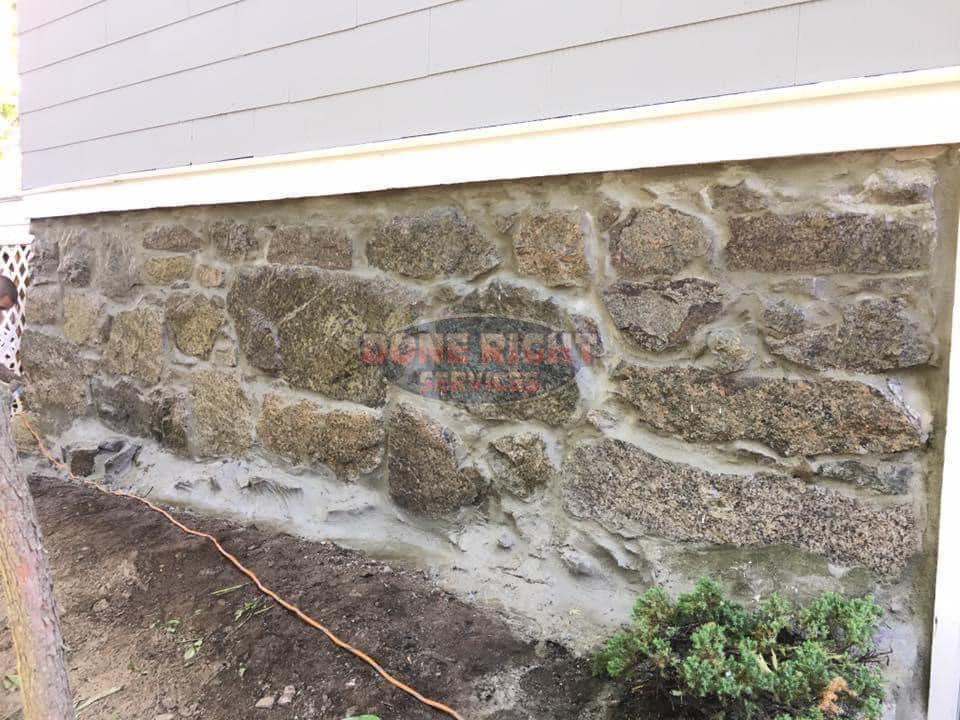
Stone foundation repointing in MA refers to the process of removing deteriorated mortar from the joints between stones and replacing it with fresh mortar that bonds properly, seals against water intrusion, and restores the structural cohesion of the wall. It is one of the most effective and cost-efficient repairs a homeowner can make to a masonry foundation.
The reason timing matters so much is that mortar needs consistent temperatures above 40 degrees Fahrenheit to cure correctly. Work done too early in the season can result in mortar that freezes before it sets, which defeats the purpose entirely. Spring in Massachusetts, particularly from mid-April through June, offers reliable conditions for repointing work to be completed properly.
Beyond the curing requirements, spring repointing gives the repaired foundation an entire warm-weather season to dry, harden, and settle before the next freeze-thaw cycle begins. That matters because new mortar that has had months to fully cure performs dramatically better when winter arrives again compared to mortar applied too close to the cold season.
Addressing spring foundation repair in MA before summer also prevents a common mistake: assuming that because the weather is good, the problem can wait. Deteriorated mortar wicks moisture throughout the summer. That moisture feeds biological growth inside the wall, accelerates the breakdown of adjacent mortar, and sets the foundation up for even worse damage the following winter.
Choosing the Right Approach to Spring Foundation Repair in MA
Not all foundation repairs are the same, and not all repointing jobs require the same approach. The type of stone, the original mortar composition, and the extent of the damage all factor into what materials and methods are appropriate.
One of the most important considerations in Massachusetts is using a mortar that matches the original in terms of hardness and composition. Older stone foundations were often built with lime-based mortars that are softer and more flexible than modern Portland cement-based mixes. Applying a hard modern mortar to a soft historic stone can actually accelerate damage because the stone itself becomes the weak point rather than the mortar joint, which is designed to be sacrificial.
A qualified mason familiar with historic and period construction in MA will assess the existing mortar composition before selecting a replacement mix. This is not a step to skip, particularly for homes built before the mid-20th century. The wrong mortar can cause more harm over a decade than doing nothing at all.
For homeowners dealing with more extensive foundation damage after winter, repointing may be one component of a broader repair plan that includes crack injection, drainage improvements, or in serious cases, underpinning. A structural assessment by a licensed engineer or experienced foundation contractor is the appropriate starting point when the damage extends beyond surface mortar deterioration.
Spring is also an ideal time to address grading around the foundation, ensuring that water flows away from the structure rather than pooling against it, which reduces future moisture infiltration.
Conclusion
Post-winter foundation damage in Massachusetts is a predictable consequence of the state’s climate, but it is not inevitable as a long-term problem. Stone foundation repointing in MA, done properly in spring, addresses the most common form of frost damage before it escalates into something far more costly. Homeowners who make spring foundation repair in MA a seasonal habit protect not just their foundation but the entire structure above it. The investment is modest compared to what deferred maintenance eventually demands.
Need The Best Foundation Crack Repair Specialist Near You?
At Done Right Services, we’ve been the trusted name in masonry since 1998, offering top-notch stone foundation repairs, crack repairs, and basement waterproofing throughout Massachusetts and New Hampshire. Our team of experts is dedicated to restoring your home’s foundation and ensuring your basement stays dry and safe. With our lifetime warranty and 15-year money-back guarantee on all concrete foundation services, you can trust that we’ll handle your needs with precision and care. Don’t let water leaks or foundation issues damage your home—reach out to us and experience the Done Right difference today!
Owning a home in Massachusetts comes with a unique set of responsibilities, and one of the most overlooked is maintaining the stone foundation beneath your feet. Whether your home sits on a centuries-old fieldstone base in Worcester County or a cut granite foundation in the North Shore, the mortar holding those stones together will eventually deteriorate. When that happens, you face a critical decision: tackle DIY foundation repointing yourself or call in professional stone foundation repair experts in Massachusetts.
Understanding what each path involves can save you thousands of dollars and protect your home from serious structural damage.
What Is Stone Foundation Repointing and Why Does It Matter?
Repointing is the process of removing deteriorated mortar from the joints between stones and replacing it with fresh mortar. Over time, freeze-thaw cycles, moisture infiltration, and general aging cause mortar to crack, crumble, and fall out. In Massachusetts, this is a particularly common problem because the state experiences harsh winters, wet springs, and dramatic temperature swings that accelerate mortar decay faster than in warmer climates.
When mortar joints are left unaddressed, water finds its way into the foundation wall. In colder months, that water freezes and expands, pushing stones apart and widening cracks. Over several seasons, what starts as a minor cosmetic issue can evolve into a serious structural problem that threatens the integrity of your entire home. Early intervention through proper repointing stone foundation work is one of the most cost-effective ways to protect your investment and prevent water from entering your basement.
Not all mortar is created equal, and this is an important point that many homeowners learn the hard way. Historic stone foundations in Massachusetts were typically built with lime-based mortar, which is softer and more flexible than modern Portland cement. Using the wrong mortar mix during repointing can trap moisture inside the wall and cause stones to crack and spall, especially during winter. Understanding mortar composition is foundational (no pun intended) to doing this job correctly.
The Case for DIY Foundation Repointing in Massachusetts
Many homeowners are drawn to DIY foundation repointing because it appears straightforward on the surface. You chisel out the old mortar, mix a fresh batch, and press it into the joints. For someone with basic masonry skills, patience, and the right tools, tackling a small section of repointing is genuinely achievable. If the damage is limited to a small, easily accessible area and the overall structural condition of the wall is sound, a motivated homeowner can do a respectable job.
The potential cost savings are also a real consideration. Labor costs for professional stone foundation repair in MA can be significant, and doing the work yourself eliminates that portion of the expense entirely. For a tight budget, this matters. If you are comfortable working in a crawl space or basement environment and willing to invest time in research and preparation, DIY repointing on a small scale is a legitimate option worth exploring.
However, the risks are equally real. The most common mistake homeowners make is using a mortar that is too hard for the stone. Pre-mixed Portland cement mortars sold at big box stores are designed for brick and block construction, not historic fieldstone or granite foundations. Applying the wrong mix can cause irreversible damage to the stones themselves. Additionally, improper joint preparation, such as failing to remove enough old mortar before applying new material, leads to poor adhesion and premature failure of the repair.
There is also the issue of diagnostic accuracy. A homeowner inspecting their own foundation may address visible mortar deterioration without recognizing underlying problems like wall bulging, settlement, or hydrostatic pressure. These structural issues require a fundamentally different approach and addressing the mortar alone will not solve them.
When to Call Professional Stone Foundation Repair Experts in Massachusetts
Knowing when a project exceeds DIY capability is a sign of good judgment, not weakness. For most Massachusetts homeowners dealing with stone foundation issues, bringing in foundation repair experts in Massachusetts is the safer and more reliable path. Professional masons who specialize in historic stone foundations understand the specific demands of New England construction, including the right mortar compositions for different stone types, proper joint profiles, and drainage considerations that are unique to our regional climate.
Professionals bring specialized tools including angle grinders with mortar raking attachments, pneumatic chisels, and pointing tools that allow precise application in tight joints. They also have experience reading the signs of structural movement that go beyond simple mortar deterioration. When a wall is bowing, leaning, or showing signs of settlement, a licensed contractor can assess whether repointing alone is sufficient or whether additional reinforcement is needed.
One of the most compelling reasons to hire professionals for repointing stone foundation repair in MA is the warranty and accountability that comes with the work. A reputable contractor will stand behind their repairs, and in cases where permits are required, they will handle the necessary paperwork. For homeowners planning to sell their property, documented professional repairs also carry more weight with buyers and home inspectors than self-performed work.
Understanding Repointing Stone Foundation Cost in MA
Cost is understandably one of the first questions homeowners ask, and the range is wide. For DIY projects, your primary expenses are materials: mortar mix (ideally a lime-based product appropriate for historic masonry), a cold chisel and hammer or an angle grinder, pointing tools, and safety equipment. A small repair project might cost between $50 and $200 in materials, making it one of the more affordable home maintenance tasks on a per-square-foot basis.
Repointing stone foundation cost in MA for professional services varies considerably depending on the scope of work, the accessibility of the foundation, the type of stone, and the contractor’s experience level. For a typical residential foundation in Massachusetts, homeowners can generally expect to pay between $3 and $15 per square foot for professional repointing, with more complex historic restoration work running higher. A full perimeter repointing of a modest older home could run anywhere from $2,000 to $10,000 or more, depending on conditions and location within the state.
It is worth getting multiple quotes and asking specifically whether the contractor has experience with historic masonry and lime mortar. A low bid from someone who defaults to Portland cement on a lime mortar foundation could cost you far more in stone replacement and structural repairs down the road. When evaluating cost, factor in not just the immediate price but the longevity and appropriateness of the repair.
Choosing the Right Approach for Your Massachusetts Home
The decision between DIY and professional stone foundation repair in Massachusetts ultimately comes down to three factors: the scope of damage, your skill level, and the type of foundation you have. For minor deterioration on a non-historic foundation with accessible joints and no structural concerns, a confident and well-researched DIY effort is reasonable. For anything involving a significant portion of the foundation, structural irregularities, a historic home, or a basement that is actively taking on water, professional help is strongly advisable.
Before starting any work, document the condition of your foundation with photographs. Research the appropriate mortar type for your specific stone. If you are uncertain about what you are looking at, spend the money on a professional evaluation before committing to any repair strategy. Many foundation repair experts in Massachusetts offer free or low-cost assessments and can help you understand whether the situation calls for immediate professional intervention or can be monitored and maintained with careful DIY attention over time.
Networking with local historical societies or masonry preservation organizations in Massachusetts can also connect you with resources specific to New England’s building heritage, including material suppliers and vetted contractors who understand the region’s unique construction history.
Conclusion
Stone foundation repointing is a critical maintenance task for Massachusetts homeowners, and the choice between DIY and professional repair should be made thoughtfully. DIY foundation repointing can be appropriate for small, straightforward projects, but professional stone foundation repair in MA provides expertise, accountability, and long-term reliability that most homeowners simply cannot replicate on their own. Understanding the scope of your project, the cost involved, and the specific demands of your foundation type will help you make a confident and well-informed decision that protects your home for years to come.
Need The Best Foundation Crack Repair Specialist Near You?
At Done Right Services, we’ve been the trusted name in masonry since 1998, offering top-notch stone foundation repairs, crack repairs, and basement waterproofing throughout Massachusetts and New Hampshire. Our team of experts is dedicated to restoring your home’s foundation and ensuring your basement stays dry and safe. With our lifetime warranty and 15-year money-back guarantee on all concrete foundation services, you can trust that we’ll handle your needs with precision and care. Don’t let water leaks or foundation issues damage your home—reach out to us and experience the Done Right difference today!