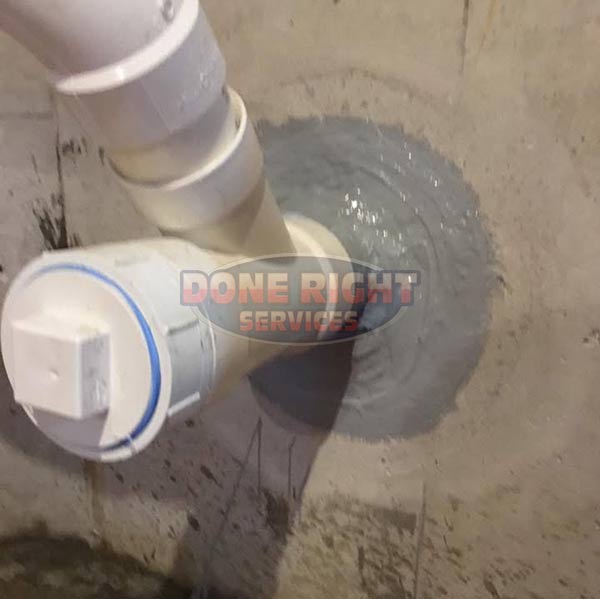
From frozen ground in January to heavy spring rains and humid summers, the soil around your foundation is constantly shifting, expanding, and contracting. Over time, that stress shows up in one of the most vulnerable places in your home: the basement floor. Whether you are dealing with hairline cracks, visible gaps along the walls, or outright water coming up through the basement floor, MA homeowners in this region face these issues more often than many realize. Understanding what causes these problems and how to address them is the first step toward protecting your home.
What Are Floor Cracks and Cold Joints, and Why Do They Form?
Your basement floor is a concrete slab, typically poured separately from the foundation walls. That seam where the floor meets the wall is called the cold joint, and it is one of the most common entry points for water in any basement. The term “cold joint” refers to the fact that the floor concrete was poured after the walls had already cured and cooled, meaning the two surfaces never truly bonded together. Over time, hydrostatic pressure from the surrounding soil pushes groundwater directly through this gap.
Cracks in the basement floor itself form for several reasons. Shrinkage during the original curing process is very common and usually results in hairline cracks that appear within the first few years of the home’s life. Settlement cracks happen when the soil beneath the slab shifts or erodes, causing sections of the floor to drop or separate. In areas like Lowell and Tewksbury, where clay-heavy soils retain moisture and freeze-thaw cycles are intense, both types of cracks tend to develop faster and worsen more aggressively than in milder climates.
The bottom line is that cracks and cold joint gaps are not just cosmetic problems. They are pathways for water, radon gas, and even soil gases to enter your living space.
Recognizing the Signs of a Failing Cold Joint or Floor Crack
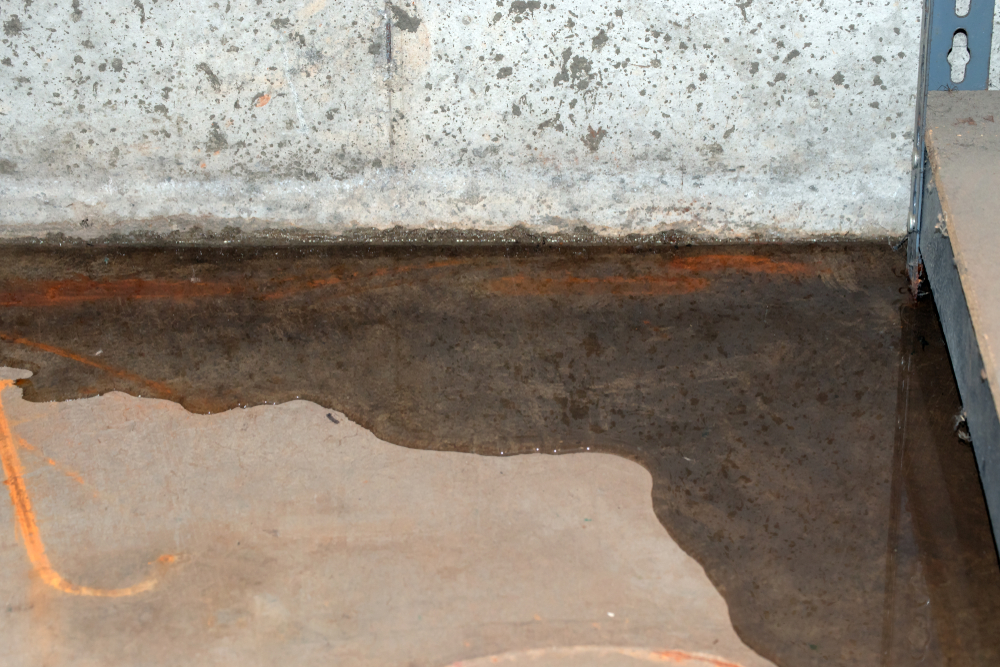
Many homeowners in Tewksbury and Lowell first notice a problem after a heavy rainstorm or during the spring thaw. You might see a thin line of moisture tracing across the floor, white chalky deposits called efflorescence forming near the walls, or puddles gathering in the corners of the basement. In more serious cases, water comes up through the floor itself, pooling in low spots and soaking into anything stored down there.
Cove joint leaks in the basement are another telltale sign. The cove joint is essentially the same as the cold joint, and when it fails, water enters in a very specific pattern, typically along the perimeter of the floor where it meets the wall. If you run your hand along that seam after a rain and feel dampness, or if you notice efflorescence building up in that same area over several months, the cove joint is likely compromised.
Other warning signs include a musty odor that persists even after the basement dries out, rust stains on the floor near cracks, and visible widening of floor cracks over time. If a crack was once the width of a credit card and is now wide enough to fit a pencil, that indicates active movement and a more serious structural or drainage issue beneath the slab.
Basement Floor Crack Repair Options for Lowell and Tewksbury Homeowners
When it comes to basement floor crack repair in Lowell, MA, the right solution depends heavily on the type and severity of the crack, as well as the source of the water intrusion. Not every crack requires the same approach, and applying the wrong fix can actually make things worse by trapping moisture inside the concrete.
For non-structural hairline cracks that are stable and dry, epoxy or polyurethane injection is a reliable repair method. A contractor injects the material under pressure directly into the crack, filling the void and bonding the two sides of the concrete back together. This works well when the crack is truly dormant and not subject to further movement.
For active cracks where water is currently entering or where movement is ongoing, a flexible hydraulic cement or crystalline waterproofing compound is often a better choice. These materials can handle minor movement without cracking again and are designed to cure in the presence of water. Crystalline products actually penetrate the concrete and react chemically to seal capillary pathways over time, making them a long-term solution for basement floor crack repair.
Cold joint waterproofing in Tewksbury and Lowell typically involves a combination of approaches. The joint itself can be cleaned out, filled with a flexible sealant, and then overlaid with a waterproof membrane or drainage channel system. In many cases, contractors will pair this repair with an interior drainage system that redirects any water that does penetrate toward a sump pump, ensuring it never reaches the living area of the basement.
The Role of Hydrostatic Pressure and Soil Conditions in This Region
One reason cold joint and floor crack issues are so prevalent in the Lowell and Tewksbury area is the specific geology of northeastern Massachusetts. Much of this region sits on a combination of glacial till, sandy loam, and clay-bearing soils that retain water at different rates. When the ground becomes saturated after heavy rainfall or snowmelt, hydrostatic pressure builds up around and beneath the foundation.
This pressure does not distribute evenly. It finds the path of least resistance, which is almost always a crack, a cold joint, or a cove joint. Water coming up through the basement floor in Massachusetts homes is often the result of this pressure forcing water upward from below, not just sideways through the walls. This is why surface-only repairs frequently fail. If you seal a crack on the top of the floor without addressing the pressure underneath, the water simply finds the next weakest point.
Proper drainage grading around the exterior of your home, functioning gutters and downspouts, and a working sump pump system are all part of a complete solution. Interior waterproofing alone is not enough if the exterior conditions are directing all the water toward your foundation.
When to Call a Professional for Basement Waterproofing
Some homeowners attempt DIY repairs using store-bought hydraulic cement or crack filler products, and in some cases these can provide a temporary fix for minor issues. However, if you are seeing water coming up through the basement floor, if cracks are actively widening, or if you have multiple cove joint leaks in the basement, it is time to bring in a professional waterproofing contractor who understands the specific soil and weather conditions in Lowell and Tewksbury.
A qualified contractor will begin with a thorough inspection, including checking the exterior grading, examining the foundation walls for bowing or cracking, and assessing whether the existing drainage and sump system is adequate. From there, they can recommend a targeted repair plan that addresses both the symptoms and the root cause.
Cold joint waterproofing in Tewksbury and basement floor crack repair in Lowell, MA should not be treated as one-size-fits-all services. The right contractor will tailor their approach to your home’s age, construction type, soil conditions, and the severity of the water intrusion.
Conclusion
Basement floor cracks and cold joint failures are among the most common and most misunderstood problems facing homeowners in Lowell and Tewksbury. The combination of freeze-thaw cycles, clay-heavy soils, and seasonal rainfall creates conditions that put constant stress on your foundation. Recognizing the early signs, understanding what is causing the problem, and choosing the right repair method can save you thousands of dollars in damage and protect your home’s value for years to come. Whether you are dealing with a minor hairline crack or water actively coming up through the basement floor, taking action sooner rather than later is always the smarter choice.
Need The Best Foundation Crack Repair Specialist Near You?
At Done Right Services, we’ve been the trusted name in masonry since 1998, offering top-notch stone foundation repairs, crack repairs, and basement waterproofing throughout Massachusetts and New Hampshire. Our team of experts is dedicated to restoring your home’s foundation and ensuring your basement stays dry and safe. With our lifetime warranty and 15-year money-back guarantee on all concrete foundation services, you can trust that we’ll handle your needs with precision and care. Don’t let water leaks or foundation issues damage your home—reach out to us and experience the Done Right difference today!
Homeowners in Concord, NH and Manchester, NH face a silent but serious challenge lurking beneath their feet. Radon gas, a naturally occurring radioactive element, seeps through the soil and enters homes through the path of least resistance: foundation cracks. Understanding the relationship between radon foundation repair, foundation integrity, and indoor air quality is essential for anyone living in southern New Hampshire, where geology and older housing stock create ideal conditions for elevated radon levels. This guide walks you through what you need to know to protect your home and your family.
What Is Radon and Why Is It a Problem in Southern New Hampshire?
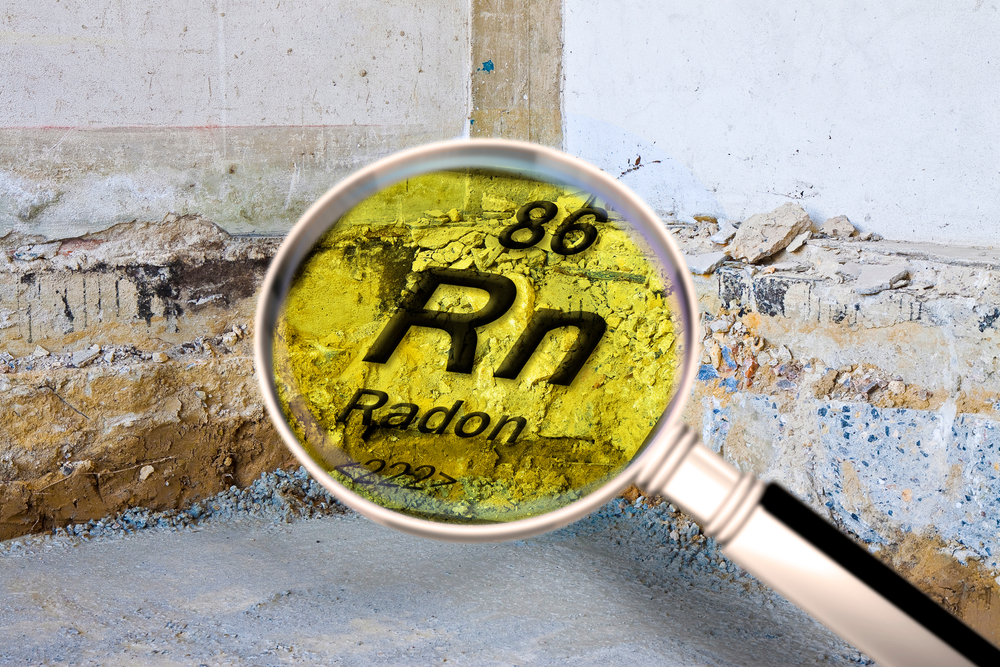
Radon is a colorless, odorless, tasteless gas that forms naturally from the decay of uranium in soil and rock. It is the second leading cause of lung cancer in the United States, responsible for roughly 21,000 deaths each year according to the EPA. In New Hampshire, radon levels tend to be higher than the national average due to the granite-rich geology underlying much of the state. Concord, NH and Manchester, NH both sit in regions where soil composition makes radon entry through foundation cracks a persistent concern for homeowners.
When radon gas accumulates in the ground below a home, pressure differences between the soil and the interior of the house draw the gas upward. It then finds any opening available, and foundation cracks are among the most common entry points. Even hairline fractures that seem cosmetically minor can allow significant radon infiltration over time. The problem compounds in colder months when homes are sealed tight against the winter air, giving radon fewer opportunities to escape and more opportunity to reach dangerous concentrations indoors.
The EPA recommends taking action when indoor radon levels reach 4 picocuries per liter (pCi/L) or higher. Testing your home is the only way to know your actual exposure level, and it is a low-cost step that every homeowner in Concord and Manchester should take seriously.
How Foundation Cracks Allow Radon to Enter Your Home
The connection between foundation cracks causing radon problems and structural damage is more direct than many homeowners realize. Foundations develop cracks for several reasons, including soil settlement, freeze-thaw cycles, hydrostatic pressure from groundwater, and the natural aging of concrete and mortar. New Hampshire winters are notoriously harsh, and the repeated expansion and contraction of soil around a foundation accelerates the cracking process considerably.
Radon entry through foundation cracks happens in a few primary ways. Cracks in poured concrete walls allow soil gases to migrate directly into the basement. Gaps at the joint where the floor meets the wall, known as the cove joint, are particularly vulnerable. Cracks in concrete block foundations present an even larger surface area for radon infiltration because the hollow cores of the blocks act as pathways that carry gas upward. Utility penetrations, sump pits, and areas where pipes enter the foundation also serve as radon entry points when not properly sealed.
In Manchester, NH, many homes were built in the early to mid-twentieth century using construction methods that did not account for radon. Older foundations are more likely to show significant cracking and deterioration, making radon infiltration more likely. Homeowners who notice visible cracks, bowing walls, or moisture intrusion should treat these signs as potential radon risks in addition to structural concerns.
The Structural Side of the Problem: When Cracks Mean More Than Radon
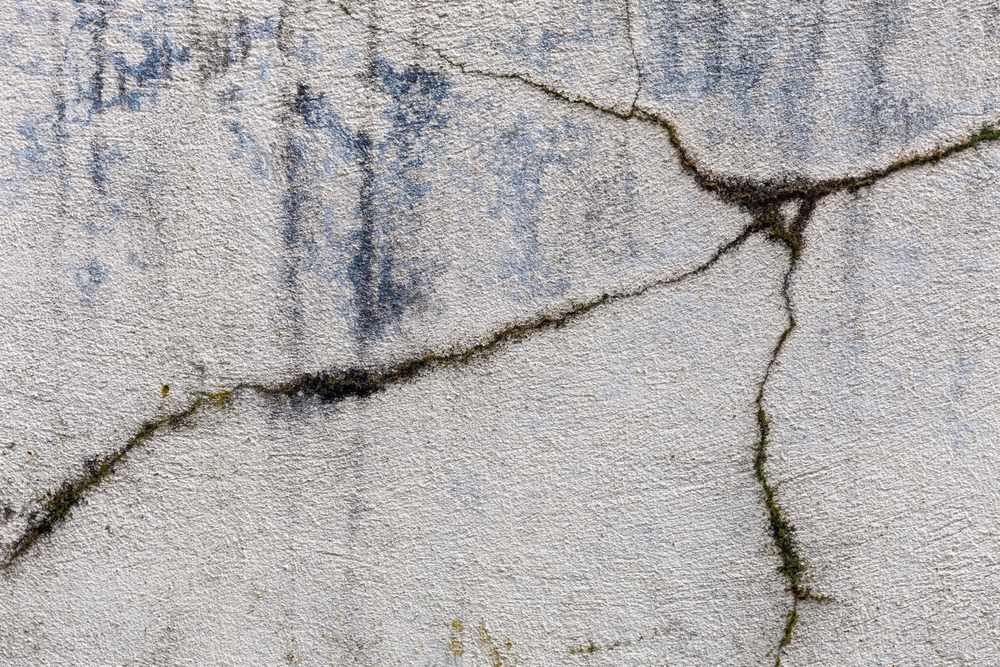
While radon is a major health concern, foundation cracks also signal potential structural problems that deserve attention in their own right. Not all cracks are equal. Hairline cracks in poured concrete are often the result of normal curing and settling. However, horizontal cracks in basement walls, stair-step cracks in block foundations, and cracks wider than a quarter of an inch suggest more serious structural movement that requires professional evaluation.
In Concord, NH, clay-heavy soils in certain neighborhoods absorb and release water seasonally, exerting significant lateral pressure on foundation walls. Over time, this pressure causes walls to bow inward or crack along stress lines. If left unaddressed, these structural failures can compromise the entire home. Carbon fiber straps, wall anchors, and steel I-beams are commonly used by foundation repair professionals to stabilize and reinforce compromised walls before damage progresses further.
The overlap between structural safety and radon mitigation is significant. A foundation that is repaired for structural reasons becomes a more effective barrier against radon when sealing is incorporated into the repair process. Addressing both issues together is more cost-effective than handling them separately, and it ensures that repairs are not undermined by ongoing structural movement.
Radon Mitigation and Foundation Sealing: A Combined Approach
Radon mitigation foundation sealing is one component of a comprehensive radon reduction strategy, though sealing alone is rarely sufficient to bring levels down to acceptable limits. The most effective and widely used method is sub-slab depressurization, sometimes called active soil depressurization. This system involves inserting a pipe through the foundation floor into the soil or gravel beneath, then using a fan to draw radon-laden air out from under the home and vent it safely to the exterior.
Foundation sealing works best as a complement to this system. When cracks, joints, and penetrations are properly sealed using hydraulic cement, epoxy injections, or polyurethane foam, the number of entry points for radon is reduced and the depressurization system becomes more efficient. In Manchester, NH and Concord, NH, where basements are common and often used as living space, this combined approach delivers the most reliable results.
Homeowners should work with certified radon mitigation contractors who are familiar with New Hampshire building conditions. Professionals who also specialize in radon foundation repair understand how to coordinate structural crack repair with sealing techniques, ensuring that the work holds up against the movement and moisture typical of the region. After any mitigation system is installed, post-mitigation testing confirms whether the radon levels have been adequately reduced.
Protecting Your Home in Concord and Manchester for the Long Term
Long-term radon management requires ongoing attention rather than a one-time fix. Even after a successful mitigation installation, it is good practice to retest your home every two years or after any significant renovation that affects the foundation or ventilation. Mitigation systems should be inspected periodically to ensure the fan is operating correctly and that no new cracks have developed that could compromise the system’s effectiveness.
For homeowners in Concord, NH and Manchester, NH, investing in a thorough foundation inspection is a practical starting point. An inspector can identify both structural concerns and radon entry points simultaneously, allowing homeowners to make informed decisions about repair priorities. Addressing foundation cracks causing radon problems early, before they widen or multiply, reduces both the health risk and the eventual cost of repair.
Moisture management is another piece of the long-term puzzle. Waterproofing the basement interior, improving exterior drainage, and ensuring gutters direct water away from the foundation all reduce hydrostatic pressure on walls. Less pressure means fewer new cracks, fewer radon entry points, and a healthier, more structurally sound home overall.
Conclusion
The relationship between radon, foundation cracks, and structural safety is well established and particularly relevant for homeowners in Concord, NH and Manchester, NH. Radon entry through foundation cracks is one of the most common ways this dangerous gas reaches living spaces, and it is also one of the most preventable. By combining radon mitigation foundation sealing with proper structural crack repair, homeowners can address both health and safety concerns in a single, coordinated effort. Whether you are dealing with visible cracks, unexplained moisture, or an elevated radon test result, the time to act is before the problem grows. A certified professional familiar with radon foundation repair and local soil conditions is your best resource for developing a plan that protects your home and everyone in it.
Need The Best Foundation Crack Repair Specialist Near You?
At Done Right Services, we’ve been the trusted name in masonry since 1998, offering top-notch stone foundation repairs, crack repairs, and basement waterproofing throughout Massachusetts and New Hampshire. Our team of experts is dedicated to restoring your home’s foundation and ensuring your basement stays dry and safe. With our lifetime warranty and 15-year money-back guarantee on all concrete foundation services, you can trust that we’ll handle your needs with precision and care. Don’t let water leaks or foundation issues damage your home—reach out to us and experience the Done Right difference today!
New England weather puts serious stress on foundations year after year. Freezing winters, wet springs, and humid summers all work together to widen cracks, shift masonry, and invite water into your basement. But not all foundation cracks are the same, and not all repair strategies work equally well across different foundation types. Understanding the difference between block and stone foundation crack repair is essential before you call a contractor or try to address the problem yourself.
This guide breaks down the key differences between these two common foundation types found throughout Massachusetts, explains why each one cracks, and outlines the most effective repair approaches for homeowners in Andover and Westford.
What Makes Block and Stone Foundations So Different
Concrete block foundations and stone foundations may both be made from masonry materials, but they behave very differently under pressure and moisture. Concrete block foundations, which became common in mid-20th century construction, are built from uniform hollow or solid blocks stacked in a grid pattern. Because of this uniformity, they tend to crack in predictable places, particularly along mortar joints and in stair-step patterns near corners. When a block foundation crack repair is needed in Andover, MA, contractors can often identify the cause quickly based on the crack pattern alone.
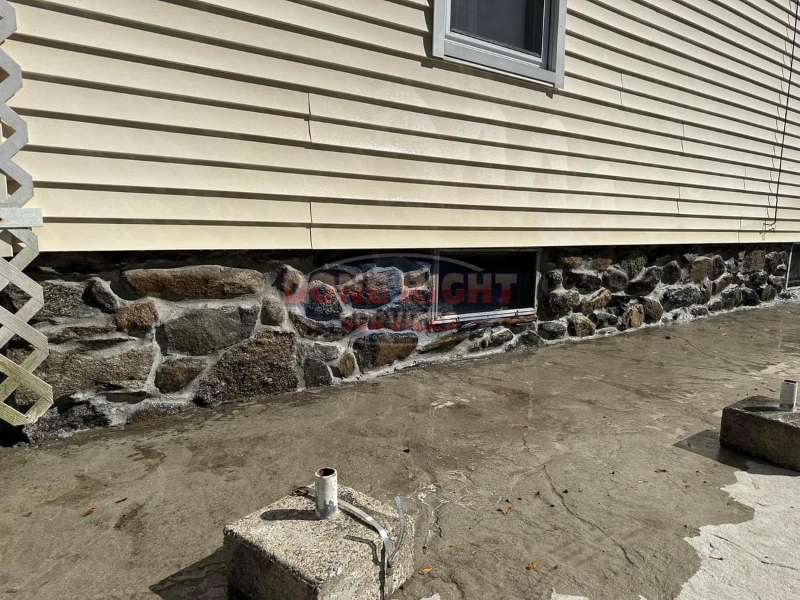
Stone foundations, on the other hand, are far less predictable. Many homes in Westford, MA were built in the 18th and 19th centuries using fieldstone, granite, or other locally quarried rock. Fieldstone foundation cracks in Massachusetts tend to develop not just in the mortar but also within the irregular joints between stones that shift over decades. Stone foundations were often built without footings by modern standards, meaning they settle unevenly as the soil beneath them moves. This makes stone foundation repair in Westford, MA a more complex and labor-intensive process than working with block.
Both foundation types share a common vulnerability: water infiltration. When moisture enters through cracks and then freezes, it expands and widens existing damage. This cycle, repeated over many winters, is one of the primary reasons homeowners in both towns eventually need professional masonry work.
Common Causes of Foundation Cracks in Massachusetts
The freeze-thaw cycle that defines Massachusetts winters is the single biggest contributor to foundation deterioration in both Andover and Westford. When water seeps into a small crack and then freezes overnight, it expands with enormous force. Over time, this repeated pressure turns hairline cracks into serious structural gaps.
Soil movement is another major factor. New England soil is often composed of a mix of clay, loam, and glacial till. Clay-heavy soil expands when wet and contracts when dry, which puts lateral pressure on foundation walls throughout the year. Homes built on slopes or near wetlands, which are common in Westford, MA, face additional hydrostatic pressure from groundwater that pushes against the foundation from the outside.
Tree root intrusion, poor drainage around the foundation perimeter, and aging mortar that has simply reached the end of its lifespan also contribute to cracking. For stone foundations specifically, the original lime-based mortar used in older construction breaks down over time and loses its bonding ability, leaving gaps that water exploits immediately. For block foundations in Andover, MA, carbonation of the concrete over decades can weaken the blocks themselves, making them more susceptible to absorbing moisture and cracking under load.
Understanding what caused the crack is just as important as knowing how to fix it. A repair that addresses only the symptom and not the source will fail within a few years.
Block Foundation Crack Repair Methods in Andover, MA
When it comes to block foundation crack repair in Andover, MA, contractors generally choose between three primary approaches depending on the severity of the damage. Surface patching with hydraulic cement or epoxy injection is appropriate for minor non-structural cracks that are not actively leaking. This method fills the crack from the inside and prevents water from entering, but it does not address any underlying structural weakness.
For cracks caused by lateral soil pressure or foundation bowing, carbon fiber straps or wall anchors are often the preferred solution. These systems stabilize the wall and prevent further inward movement without requiring excavation. They are particularly effective in block foundations because the smooth, uniform surface makes it easier to apply the hardware correctly and achieve a strong bond.
In more severe cases where blocks have shifted significantly or water has been infiltrating for years, partial or full wall replacement may be necessary. This involves excavating around the exterior, removing the damaged section, and rebuilding it with new block and masonry foundation waterproofing membrane applied to the outside face. Masonry foundation waterproofing in this context typically includes a combination of drainage board, dimple mat, and a waterproof coating that directs water away from the wall and toward a perimeter drain.
Interior drainage systems paired with a sump pump are often installed alongside structural repairs to manage any water that still makes its way through. Homeowners in Andover, MA dealing with a wet basement should not skip this step, even after visible cracks are repaired.
Stone Foundation Repair Methods in Westford, MA
Stone foundation repair in Westford, MA requires a different mindset because the goal is often preservation as much as correction. Many of these structures are well over a hundred years old, and the stones themselves remain strong even when the mortar between them has completely deteriorated. Repointing, which involves removing old mortar to a certain depth and replacing it with new material, is the most common repair technique for fieldstone foundations.
The choice of mortar matters enormously when repairing fieldstone foundation cracks in Massachusetts. Modern Portland cement mortar is too rigid and too strong for old stone foundations. When a hard mortar is applied to old stone, the mortar does not give when the foundation shifts slightly, so the stone itself cracks instead. Lime-based mortar, which is more flexible and breathable, is the historically appropriate and technically correct choice for stone foundation repointing in this region.
For fieldstone foundations that have shifted, bulged, or partially collapsed, more extensive intervention is required. This can involve temporary shoring of the structure above, removal and rebuilding of the affected section, and the addition of a reinforced concrete collar or underpinning to provide a stable base going forward. Masonry foundation waterproofing is also applied to stone foundations, though the approach differs slightly. Because stone walls are inherently porous and irregular, interior drainage systems combined with spray-applied waterproofing on the interior face are often more practical than exterior excavation.
Homeowners in Westford, MA should also be cautious about who they hire for this work. Stone foundation repair requires experience with historic masonry, proper mortar selection, and an understanding of how these old structures behave. A contractor who specializes only in modern concrete work may not have the knowledge needed to handle a 200-year-old fieldstone foundation correctly.
Conclusion
Whether you are dealing with a cracked concrete block wall in Andover, MA or a deteriorating fieldstone foundation in Westford, MA, the repair approach needs to match the specific material, the cause of the damage, and the long-term goals for the structure. Block foundation crack repair tends to follow more standardized methods, while stone foundation repair demands a more customized and historically sensitive approach. In both cases, addressing water infiltration through proper masonry foundation waterproofing is a critical part of any lasting solution.
Fieldstone foundation cracks in Massachusetts are not something to put off. The longer a crack is left unaddressed, the more water infiltrates, the more the freeze-thaw cycle does its damage, and the more expensive the eventual repair becomes. Getting a professional evaluation early is the most cost-effective step any homeowner in Andover or Westford can take to protect their investment.
Need The Best Foundation Crack Repair Specialist Near You?
At Done Right Services, we’ve been the trusted name in masonry since 1998, offering top-notch stone foundation repairs, crack repairs, and basement waterproofing throughout Massachusetts and New Hampshire. Our team of experts is dedicated to restoring your home’s foundation and ensuring your basement stays dry and safe. With our lifetime warranty and 15-year money-back guarantee on all concrete foundation services, you can trust that we’ll handle your needs with precision and care. Don’t let water leaks or foundation issues damage your home—reach out to us and experience the Done Right difference today!
A stone foundation is often a hallmark of historic homes and early American architecture. Built for durability and using locally sourced stone, these foundations have withstood time, weather, and shifting soil. However, many homeowners are surprised to learn that stone foundation movement can cause structural problems that only become noticeable after several decades, sometimes even close to a century. Unlike modern materials that show signs of wear more quickly, the nature of stone and lime mortar allows damage to remain hidden until the problems are well advanced.
Understanding why stone foundation shifting occurs, why it takes so long to become visible, and what can be done to repair or stabilize such foundations is critical to preserving the structural integrity of older homes. Let’s explore the hidden timeline behind historic stone foundation problems and what leads to their eventual failure.
Natural Settling and Soil Movement: The Silent Trigger
At the core of most stone foundation movement is the interaction between the structure and the soil beneath it. Over time, the earth surrounding and supporting a foundation can shift. This might be caused by changes in moisture levels, tree root growth, freeze-thaw cycles, or simply the natural settling of soil. When these changes occur gradually, the effects on a stone foundation are almost imperceptible.
In many cases, the stones themselves are not set with concrete or modern bonding agents. Instead, older foundations were assembled with fieldstone or quarried stone and bonded with lime-based mortar. This allowed for flexibility during minor settling, which was seen as an advantage at the time. However, as the soil moves or compresses over many years, it can cause the foundation to lose alignment, resulting in small separations, tilting, or bulging walls.
Because the changes are so incremental, stone foundation shifting can take decades to become serious. A house may stand for generations before anyone notices that doors stick, floors are sloping, or cracks have begun to appear in the plaster walls.
Moisture Intrusion and Mortar Decay: A Slow Erosion
Another key factor behind causes of stone foundation failure is moisture. Water is the enemy of every structure, but especially of those built with traditional stone and mortar techniques. Old stone foundations were not constructed with waterproofing membranes, drainage systems, or modern vapor barriers. Instead, they relied on gravity and good drainage design to shed water away from the base of the home.
Over time, moisture can work its way into the joints between stones. This leads to stone foundation mortar deterioration, especially if the mortar used was lime-based and not regularly maintained. When the mortar begins to erode, it weakens the bond between the stones. Rainwater, groundwater, or even humidity in the basement accelerates this degradation.
In regions with freeze-thaw cycles, water entering these joints freezes in winter, expands, and then melts. This cycle slowly pushes stones apart and allows further water infiltration. Though the damage from one winter may be negligible, after decades of this process, the structural integrity of the foundation can be significantly compromised. That’s why homeowners may only notice signs of stone foundation repair needs when the mortar has eroded to the point that structural shifting has begun.
Poor Drainage and Hydrostatic Pressure: Forces That Build Over Time
Water not only erodes mortar but also exerts physical pressure on foundation walls. Homes with poor exterior drainage, clogged gutters, or inadequate grading can develop problems where rainwater pools near the foundation. This contributes to hydrostatic pressure, the force of water pushing against the walls.
Stone foundations are especially vulnerable because they were never designed to resist high lateral loads. The stones themselves are heavy and stable in compression, but when pushed from the side over many years, they can bow inward or outward. This kind of slow, uneven pressure results in visible foundation movement over long periods.
In cases where old stone foundation leaking occurs, the problem may begin with tiny gaps or cracks. As hydrostatic pressure forces water through these openings, it further displaces mortar and weakens the overall structure. Homeowners in century-old properties may suddenly discover a damp basement, crumbling walls, or evidence of mold, signs that the long-simmering issue has finally surfaced.
Lack of Maintenance and Incompatible Repairs: Accelerators of Decay
One of the biggest contributors to historic stone foundation problems is a lack of regular maintenance. These structures were built to last, but not to be ignored. Unlike concrete foundations that require little attention for decades, stone requires periodic inspection and re-pointing of mortar joints. When this is neglected, the wear compounds quietly over time.
In some cases, well-meaning repairs can actually worsen the problem. Using Portland cement-based mortar, for example, is a common mistake in older homes. While stronger than traditional lime mortar, cement is too rigid for stone foundations. It doesn’t allow the stones to flex and move slightly with soil shifts. Instead, the rigidity causes stress to concentrate in certain areas, accelerating cracking or pushing stones loose. These incompatible repairs can cause premature stone foundation shifting.
Modern homeowners may also seal walls from the inside with waterproof coatings, which can trap moisture within the walls. Without a breathable surface, water absorbed by the foundation has nowhere to escape, creating a wet internal environment that leads to further stone and mortar breakdown.
The Myth of Sudden Collapse: Why the Problems Wait 100 Years
It may seem odd that the effects of stone foundation failure take so long to emerge. The reality is that these foundations were overbuilt relative to the loads they needed to support. Stone walls are often two feet thick or more, distributing weight well across their mass. This is why many historic homes remain standing long after signs of movement have begun.
What makes the damage so deceptive is its cumulative nature. A small crack does not mean imminent failure. A bowing wall may remain structurally stable for decades. But behind the scenes, each year of exposure to moisture, settling soil, and lack of maintenance chips away at the strength of the system. Eventually, the warning signs become impossible to ignore: musty smells, uneven floors, visible gaps between stones, and chronic dampness in the basement.
The 100-year mark is not magic, but it often aligns with when all these slow-moving forces reach a critical point. A home built in 1910 may not show serious issues until 2010 or later because the original materials were robust, but not invincible. By the time visible stone foundation movement is evident, the deterioration has typically been progressing quietly for decades.
Conclusion: Repair, Stabilize, and Respect the Past
Preserving a historic stone foundation is both a challenge and a responsibility. These structures are part of architectural heritage and deserve thoughtful care. When faced with stone foundation shifting or signs of leakage, immediate action is required to prevent the situation from worsening.
Stone foundation repair should always be approached with an understanding of the original building techniques. This includes using compatible lime mortar for repointing, improving exterior drainage to minimize water pressure, and avoiding rigid materials that disrupt the natural movement of stone. In some cases, stone foundation stabilization with internal bracing or external grading may be necessary to prevent collapse.
Understanding the causes of stone foundation failure also helps homeowners make informed decisions. Moisture intrusion, mortar decay, soil movement, and improper repairs all play roles in the long-term degradation of these structures. However, the slow pace of deterioration provides an opportunity for intervention before total failure occurs.
By recognizing the warning signs early and employing historically appropriate methods, it’s possible to give these stone foundations a new lease on life. In doing so, homeowners not only protect their investment but also preserve a piece of architectural history that was designed to endure, even if it takes a century for the first cracks to appear.
Need The Best Foundation Crack Repair Specialist Near You?
At Done Right Services, we’ve been the trusted name in masonry since 1998, offering top-notch stone foundation repairs, crack repairs, and basement waterproofing throughout Massachusetts and New Hampshire. Our team of experts is dedicated to restoring your home’s foundation and ensuring your basement stays dry and safe. With our lifetime warranty and 15-year money-back guarantee on all concrete foundation services, you can trust that we’ll handle your needs with precision and care. Don’t let water leaks or foundation issues damage your home—reach out to us and experience the Done Right difference today!
When it comes to maintaining the integrity of your home’s foundation, the battle between tie rod services and traditional basement waterproofing often arises. Homeowners are increasingly faced with tough decisions about which method offers lasting protection and addresses not just symptoms, but also root causes of structural damage. While both methods serve their purpose, their long-term effectiveness differs significantly depending on the condition of your foundation and the goals of your repair strategy.
In older homes across New England, particularly those with stone foundations or experiencing significant structural stress, foundation movement is a frequent concern. Tie rod services, MA residents are discovering, provide more than just a cosmetic fix. They can play a critical role in foundation bowing repair, stone foundation stabilization, and structural wall stabilization, New England-wide. But is that enough to outweigh the benefits of traditional basement waterproofing? To make an informed decision, let’s examine both strategies closely.
The Mechanics of Tie Rod Services and When They Work Best
Tie rod foundation repair involves installing high-tensile steel rods through the foundation wall, usually anchored outside the wall with plates or concrete deadmen. These rods are tensioned to counteract lateral forces pushing the wall inward, commonly from hydrostatic pressure or soil movement. Over time, this method has proven to be a highly effective approach to fix bulging foundation wall issues and stop further inward movement.
One of the reasons tie rod services, MA contractors frequently recommend them, is their immediate effectiveness. Unlike other solutions, tie rods actively resist pressure and hold the foundation in place. In homes with older stone or masonry walls, tie rods help stabilize the structural integrity without requiring total wall replacement. This makes tie rod foundation repair a more cost-effective and less invasive alternative compared to full excavation or wall reconstruction.
Tie rods are also beneficial in cases where foundation bowing has already started. As foundation movement repair becomes necessary, this solution can restore structural alignment and prevent collapse. While they don’t waterproof a basement directly, tie rods address the deeper structural issues that often lead to water infiltration in the first place. Therefore, they can be considered both a proactive and reactive form of structural wall stabilization.
Traditional Waterproofing: A Moisture-First Approach
Traditional basement waterproofing focuses on controlling water infiltration through drainage systems, waterproof coatings, sump pumps, and sealants. The main goal is to divert or block water before it can enter the basement. This method is typically employed in homes where water seepage is a concern, but no immediate structural damage is present.
While waterproofing can reduce the risk of future damage and create a more comfortable basement environment, it does little to address underlying structural issues. For example, if you have a bowing or bulging wall due to soil pressure, waterproofing won’t stop the progression. In fact, in some cases, it may mask more severe foundation problems until it’s too late.
However, waterproofing does serve a critical role in protecting finished basements or living spaces from moisture. For homeowners whose primary concern is dampness, mold, or basement flooding, waterproofing can offer peace of mind. But when considering waterproofing vs tie rods for long-term outcomes, it’s clear that waterproofing may only be one piece of a more comprehensive foundation repair plan.
Structural Implications: More Than Just Water
The difference between tie rod services and traditional waterproofing lies in their core focus: structure versus moisture. Tie rod foundation repair is inherently structural. It responds to forces causing the foundation to shift, bow, or bulge. Waterproofing, by contrast, is largely a preventive tactic against water damage.
This becomes particularly important when dealing with older homes in New England. Stone foundation stabilization, for instance, often requires more than waterproofing. As these foundations age, they experience both moisture infiltration and structural degradation. Simply applying a waterproof membrane won’t restore the original strength or alignment of a stone wall.
Similarly, in homes where there’s visible wall deflection, cracks, or uneven floors, foundation bowing repair using tie rods and other anchoring systems becomes critical. Structural wall stabilization, New England climate conditions considered, must account for expansive soils, freeze-thaw cycles, and fluctuating water tables. Tie rods can stabilize a wall, maintain alignment, and hold back soil pressure, which waterproofing cannot do.
Additionally, when homeowners attempt to fix bulging foundation wall problems solely with internal drain systems or sump pumps, they risk ignoring the external forces driving the damage. The effectiveness of waterproofing becomes secondary when the wall is on the verge of structural failure.
Longevity and Maintenance: The Real Decider
In evaluating long-term outcomes, tie rod services provide enduring structural integrity. Once installed, tie rods require minimal maintenance, and their effectiveness can last for decades. Their role in halting foundation movement repair is substantial, especially in environments prone to shifting soils or poor drainage.
On the other hand, traditional waterproofing methods may require more frequent upkeep. Sump pumps need power and maintenance, drainage tiles can clog, and sealants deteriorate over time. Furthermore, because they don’t address pressure buildup or wall deflection, traditional waterproofing systems may eventually fail if structural issues continue to worsen.
In this sense, tie rod services, MA homeowners have learned, often represent a “fix it once” approach to foundational problems. This does not mean waterproofing is irrelevant. In many cases, a hybrid approach offers the best of both worlds. Tie rods can restore wall stability while external or internal waterproofing systems manage moisture levels. However, for homes already showing signs of wall movement, tie rods offer the core protection necessary to maintain long-term safety and value.
Choosing the Right Path for Your Home
The choice between tie rod services and traditional basement waterproofing comes down to the nature of your home’s foundation problems. If you’re experiencing moisture without visible structural damage, waterproofing may suffice. But if you see wall bowing, cracking, or other signs of stress, tie rod foundation repair is the more comprehensive, long-lasting solution.
Foundation bowing repair and foundation movement repair require more than patchwork. They demand structural solutions that withstand the test of time and the pressures of soil and water. Structural wall stabilization, New England weather conditions included, must go beyond surface-level fixes. Tie rod services, when executed properly, provide that critical layer of structural security, especially in homes with aging or stone foundations.
When evaluating waterproofing vs tie rods, remember that waterproofing addresses the effects, while tie rods tackle the causes. For stone foundation stabilization and the need to fix bulging foundation wall issues, tie rod systems are not just a fix; they are an investment in your home’s longevity.
Ultimately, the most effective approach may involve both strategies. But the foundation of your home deserves more than temporary relief. With tie rod services, you’re not just preventing water. You’re securing your home’s future.
Need The Best Foundation Crack Repair Specialist Near You?
At Done Right Services, we’ve been the trusted name in masonry since 1998, offering top-notch stone foundation repairs, crack repairs, and basement waterproofing throughout Massachusetts and New Hampshire. Our team of experts is dedicated to restoring your home’s foundation and ensuring your basement stays dry and safe. With our lifetime warranty and 15-year money-back guarantee on all concrete foundation services, you can trust that we’ll handle your needs with precision and care. Don’t let water leaks or foundation issues damage your home—reach out to us and experience the Done Right difference today!