

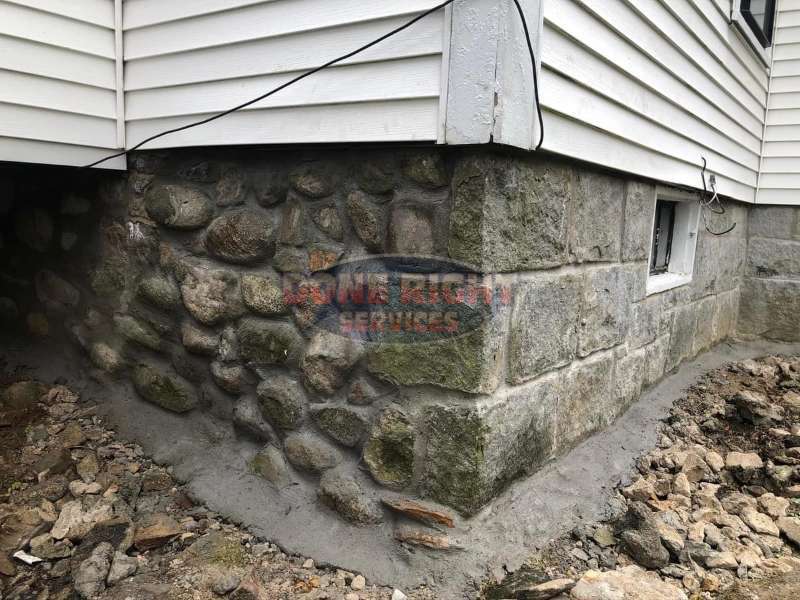
Your stone foundation is one of the most important structural elements keeping your house standing. Over time, the mortar between those stones deteriorates, cracks, and crumbles, leaving gaps that allow water, pests, and cold air to enter. Repointing, which is the process of removing damaged mortar and replacing it with fresh material, is a necessary maintenance task. However, the type of mortar you choose matters enormously. Using the wrong mix can cause more damage than the original deterioration itself.
Proper mortar matching for stone foundations is not simply a cosmetic concern; it is a structural and preservation imperative for homeowners across MA and NH.
Why Mortar Matching Matters for Stone Foundations
Stone foundations built in Massachusetts and New Hampshire before the twentieth century were almost universally laid using lime-based mortars. These older formulations were softer and more flexible than modern Portland cement mixes. They were designed to work with the natural movement of stone, absorbing stress and allowing minor shifts without cracking the masonry units themselves.
When a contractor fills aged joints with modern cement mortar, a serious problem develops. The new material is significantly harder than the surrounding stone and the original lime mortar. Because stone and mortar expand and contract at different rates with temperature changes, and because New England winters are notoriously harsh, the rigid cement mortar has nowhere to flex. Instead of the mortar absorbing the stress, the force transfers directly into the stone itself, causing spalling, fracturing, and long-term structural weakening.
Correct mortar matching for stone foundations means analyzing the original mix and replicating its composition as closely as possible. This protects the integrity of the stones, preserves the historical character of the structure, and ensures that your foundation repair materials are compatible with what was already there.
Lime Mortar vs Cement Foundation: Understanding the Core Difference
The debate around lime mortar vs cement foundation repair is central to any repointing project on an older New England home. Understanding the properties of each material helps homeowners and contractors make informed decisions.
Lime mortar is composed of lime putty or hydraulic lime, sand, and water. It has been used in construction for thousands of years and was the standard for American masonry well into the early twentieth century. Its key properties include flexibility, breathability, and self-healing capacity. When hairline cracks develop in lime mortar, carbonation can actually allow the material to re-knit over time. It also allows moisture vapor to pass through the wall, which helps prevent the kind of trapped moisture that leads to efflorescence, freeze-thaw damage, and eventual structural failure.
Portland cement mortar became widely adopted in the mid-twentieth century and offers high compressive strength and fast curing times. For modern concrete block construction, it performs well. However, when applied to pre-twentieth century stone foundations in MA or NH, it creates a moisture trap. Water that enters the wall cannot escape through the hard cement joints, so it migrates into the stone itself and causes internal damage with every freeze-thaw cycle.
For most historic stone foundations across Massachusetts and New Hampshire, a hydraulic lime mortar or a lime-and-sand blend closely matched to the original is the correct choice. There are situations where a small percentage of Portland cement may be appropriate, particularly for foundations exposed to constant water contact, but this should only be added with great caution and after careful analysis.
Repointing Mortar Types and How to Choose the Right One
There are several repointing mortar types available on the market today, and selecting the correct one requires understanding both the original construction and the current condition of your foundation.
Type O mortar is a low-strength mix suitable for interior walls and above-grade applications where loads are light. It contains a high ratio of lime to cement and is sometimes appropriate for very old, soft stone foundations where matching a particularly weak original mortar is necessary.
Type K mortar contains almost no Portland cement and is nearly pure lime. It is primarily used in historic preservation work on extremely fragile masonry, such as structures listed on the National Register of Historic Places. Many old homes in New Hampshire and Massachusetts that fall under preservation guidelines will require a Type K or a custom lime putty mortar to meet standards set by the Secretary of the Interior.
Natural hydraulic lime, or NHL, mortars have become increasingly popular for foundation repointing work in New England. They offer a middle ground between the softness of pure lime putty and the hardness of Portland cement mixes. NHL 2 and NHL 3.5 products are commonly specified for stone foundation work because they set reliably even in damp conditions, which is a critical factor in the wet basements and crawl spaces found across MA and NH properties.
Custom site-matched mortars, where a sample of the original material is sent to a lab for petrographic analysis, represent the gold standard for mortar matching in stone foundation projects. This approach is especially valuable for older homes where the original mix included local aggregates, organic additives, or pozzolans that gave the mortar unique properties.
Regional Considerations for MA and NH Stone Foundations
Homeowners in Massachusetts and New Hampshire face a distinct set of challenges that make proper mortar matching even more critical than it might be in other parts of the country. The climate in this region is characterized by significant freeze-thaw cycling, heavy precipitation, and ground frost that can persist for months. These conditions put relentless mechanical stress on foundation masonry.
Many foundations in coastal Massachusetts are also subject to salt air, which accelerates the deterioration of calcium-based materials. Choosing a mortar with the right composition and porosity for salt-laden environments requires additional consideration beyond simply replicating the original mix.
In New Hampshire, the prevalence of granite fieldstone foundations adds another layer of complexity. Granite is an exceptionally hard and dense stone, which means that any mortar used for repointing must be softer than the stone itself to ensure that stress from thermal movement cracks the mortar joint rather than the stone face. Using a high-cement mortar on a granite fieldstone foundation in NH is one of the most common and costly mistakes a homeowner can make.
Building codes and preservation standards also vary between Massachusetts and New Hampshire. Homeowners in historic districts within cities like Salem, Newburyport, or Portsmouth should consult with their local historic district commission before beginning any foundation repointing work. These bodies often have specific requirements for foundation repair materials that align with best preservation practices.
Hiring a contractor who understands the specific masonry traditions and material characteristics of New England is essential. A professional experienced with historic stone foundations across MA and NH will know how to conduct a proper site assessment, select the appropriate repointing mortar type, and execute the work in a way that extends the life of your foundation rather than shortening it.
Conclusion
Proper mortar matching is not a detail to overlook when repointing a stone foundation in Massachusetts or New Hampshire. The choice between lime mortar and cement, the selection of the right repointing mortar type, and the use of appropriate foundation repair materials all directly affect how long your foundation lasts and how well it holds up against New England’s demanding climate. Taking the time to match your mortar correctly protects your investment, preserves the character of your home, and ensures that your foundation continues to do its job for generations to come.
Need The Best Foundation Crack Repair Specialist Near You?
At Done Right Services, we’ve been the trusted name in masonry since 1998, offering top-notch stone foundation repairs, crack repairs, and basement waterproofing throughout Massachusetts and New Hampshire. Our team of experts is dedicated to restoring your home’s foundation and ensuring your basement stays dry and safe. With our lifetime warranty and 15-year money-back guarantee on all concrete foundation services, you can trust that we’ll handle your needs with precision and care. Don’t let water leaks or foundation issues damage your home—reach out to us and experience the Done Right difference today!