

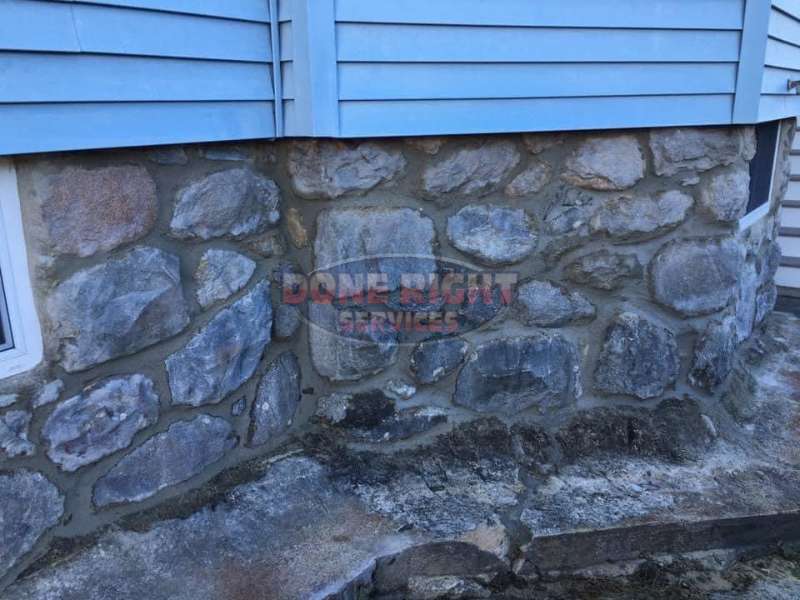
If you own an older home in Massachusetts or New Hampshire, there is a good chance your house sits on a fieldstone foundation. These sturdy, centuries-old structures were built by hand using stones pulled directly from the land, and they have supported New England homes through harsh winters, spring thaws, and everything in between. But even the toughest foundations need maintenance, and fieldstone foundation repointing is one of the most important services you can invest in to protect your home for generations to come.
This guide walks you through everything you need to know about stone foundation repair in the Northeast, from spotting early warning signs to understanding the repointing process and finding the right contractor in MA or NH.
What Is Fieldstone Foundation Repointing and Why Does It Matter?
Repointing, sometimes called tuckpointing, is the process of removing deteriorated mortar from the joints between stones and replacing it with fresh mortar. Over time, the original mortar in a fieldstone foundation breaks down due to moisture, freeze-thaw cycles, and the natural aging of materials. In Massachusetts and New Hampshire, the climate is particularly demanding. Winters bring repeated cycles of freezing and thawing that expand and contract the mortar joints, causing cracking, crumbling, and eventual failure.
When the mortar joints in a fieldstone foundation fail, water finds its way in. That moisture can lead to basement flooding, mold growth, wood rot, and structural instability. What starts as a small crack in a mortar joint can become a serious and expensive problem if left unaddressed. Fieldstone foundation repointing is not just a cosmetic fix; it is a critical structural repair that preserves the integrity of your entire home.
Historic foundation restoration is especially important in states like Massachusetts and New Hampshire, where a large percentage of the housing stock dates back to the 18th and 19th centuries. Many of these homes are cherished for their character and history, and proper repointing helps maintain that legacy without compromising the original construction.
Recognizing the Signs That Your Foundation Needs Repointing
Knowing when to call a professional for stone foundation repair starts with understanding what to look for. One of the most obvious signs is crumbling or missing mortar between the stones. If you can scrape the mortar out with a screwdriver or your fingernail, it has already lost its structural integrity and needs to be replaced.
Efflorescence is another warning sign. This is the white, chalky residue that appears on the surface of stones and mortar when water moves through the foundation and deposits minerals on the exterior. While efflorescence itself is not structurally dangerous, it is a clear indicator that water is actively penetrating your foundation.
Water stains, dampness, or puddles in your basement are also red flags. Many homeowners in MA and NH assume basement moisture is just a normal part of owning an old home, but in many cases, it is directly related to failing mortar joints. Cracks in the foundation wall, stones that appear to be shifting or bulging, and doors or windows that no longer close properly can all point to foundation movement caused by compromised mortar.
If your home is more than 75 to 100 years old and the foundation has never been repointed, it is worth having a professional evaluation even if you have not noticed any obvious issues. Preventive maintenance is always less expensive than emergency repair.
The Repointing Process: What to Expect
Understanding what goes into fieldstone foundation repointing helps you set realistic expectations and ask the right questions when hiring a contractor. The process is detailed and labor-intensive, which is why it should only be handled by experienced masons with knowledge of historic masonry techniques.
The first step is a thorough inspection of the entire foundation. A skilled mason will assess the condition of both the mortar joints and the stones themselves, identifying areas of active water intrusion, structural movement, or significant deterioration. This evaluation shapes the scope of work and the approach that will be taken.
Next comes the removal of old mortar. This is done carefully using hand tools, chisels, and sometimes small grinders, with the goal of removing deteriorated material to a depth of at least one inch without damaging the surrounding stones. This step requires patience and skill, particularly in historic foundation restoration work where preserving the original stonework is a priority.
Once the old mortar is removed, the joints are cleaned of dust and debris, and the stones are dampened to prevent them from drawing moisture out of the fresh mortar too quickly. Then the new mortar is applied in layers, carefully packed into the joints and tooled to match the historic profile.
One of the most important decisions in any stone foundation repair project in Massachusetts or New Hampshire is the mortar mix. Using the wrong type of mortar is one of the most common and damaging mistakes in historic masonry work. Modern Portland cement mortars are much harder than the original lime-based mortars used in 18th and 19th century foundations. When a hard mortar is used with soft, historic stones, the mortar does not flex with seasonal movement. Instead, it forces stress into the stones themselves, causing cracking and spalling that can permanently damage irreplaceable historic material.
For most fieldstone foundation repointing projects in MA and NH, a natural hydraulic lime mortar or a lime putty mortar is the appropriate choice. These materials are breathable, flexible, and compatible with historic stonework. They allow moisture to escape rather than trapping it behind the wall, which is critical in New England’s wet climate.
Hiring the Right Contractor for Stone Foundation Repair in MA and NH
Choosing the right contractor for fieldstone foundation repointing in Massachusetts or New Hampshire is not as simple as calling the first name you find online. Historic masonry is a specialized trade, and not every mason has the training or experience to work correctly on older foundations.
Start by asking specifically about their experience with fieldstone and historic lime mortars. A knowledgeable contractor should be able to explain why mortar selection matters and should advocate for the use of appropriate materials rather than defaulting to modern cement mixes.
Ask for references from past clients, particularly those with similar historic properties in MA or NH. Visit completed projects if possible, and look for consistent joint profiles, clean tooling, and no signs of staining or damage to the surrounding stones.
It is also worth checking whether the contractor has any experience working with the Massachusetts Historical Commission or local historic districts in New Hampshire. If your home is listed on the National Register of Historic Places or located within a historic district, there may be guidelines governing what materials and methods can be used. A contractor familiar with these requirements can save you from costly compliance issues.
Get detailed written estimates that specify the mortar mix to be used, the depth of mortar removal, the scope of work, and the projected timeline. Be cautious of contractors who offer unusually low bids, as cutting corners on material quality or mortar removal depth can result in a repair that fails within just a few years.
Conclusion
Fieldstone foundation repointing is one of the most valuable investments you can make in a historic New England home. In Massachusetts and New Hampshire, where old stone foundations face some of the most demanding weather conditions in the country, proper historic foundation restoration is not optional; it is essential. By understanding the signs of mortar failure, the importance of correct mortar selection, and what to look for in a qualified contractor, homeowners in MA and NH can protect their foundations and preserve the character of their homes for many decades to come.
Need The Best Foundation Crack Repair Specialist Near You?
At Done Right Services, we’ve been the trusted name in masonry since 1998, offering top-notch stone foundation repairs, crack repairs, and basement waterproofing throughout Massachusetts and New Hampshire. Our team of experts is dedicated to restoring your home’s foundation and ensuring your basement stays dry and safe. With our lifetime warranty and 15-year money-back guarantee on all concrete foundation services, you can trust that we’ll handle your needs with precision and care. Don’t let water leaks or foundation issues damage your home—reach out to us and experience the Done Right difference today!