

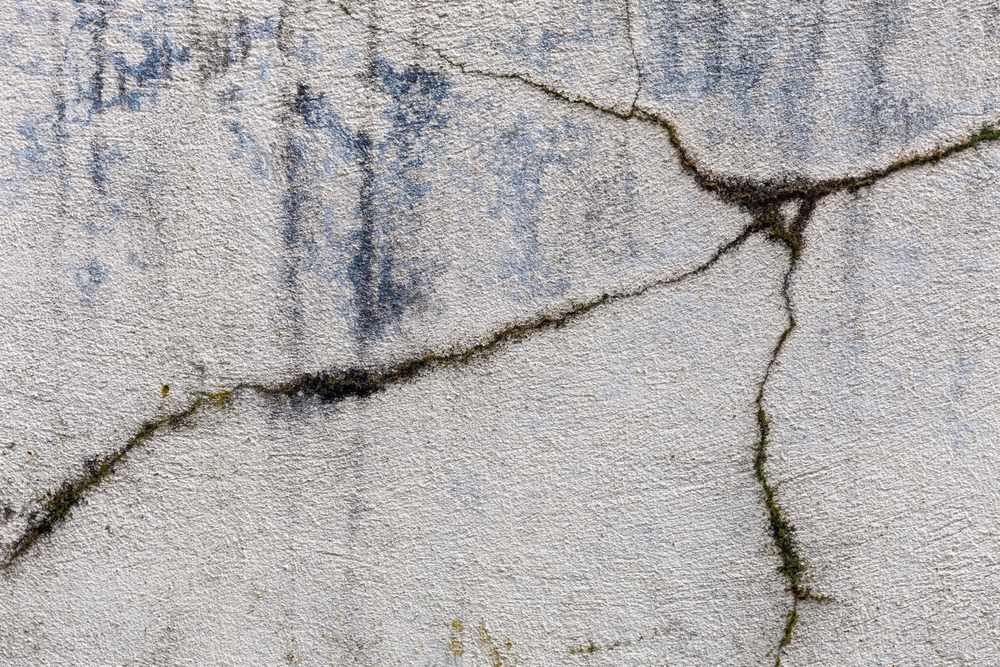
New England weather puts serious stress on foundations year after year. Freezing winters, wet springs, and humid summers all work together to widen cracks, shift masonry, and invite water into your basement. But not all foundation cracks are the same, and not all repair strategies work equally well across different foundation types. Understanding the difference between block and stone foundation crack repair is essential before you call a contractor or try to address the problem yourself.
This guide breaks down the key differences between these two common foundation types found throughout Massachusetts, explains why each one cracks, and outlines the most effective repair approaches for homeowners in Andover and Westford.
What Makes Block and Stone Foundations So Different
Concrete block foundations and stone foundations may both be made from masonry materials, but they behave very differently under pressure and moisture. Concrete block foundations, which became common in mid-20th century construction, are built from uniform hollow or solid blocks stacked in a grid pattern. Because of this uniformity, they tend to crack in predictable places, particularly along mortar joints and in stair-step patterns near corners. When a block foundation crack repair is needed in Andover, MA, contractors can often identify the cause quickly based on the crack pattern alone.
Stone foundations, on the other hand, are far less predictable. Many homes in Westford, MA were built in the 18th and 19th centuries using fieldstone, granite, or other locally quarried rock. Fieldstone foundation cracks in Massachusetts tend to develop not just in the mortar but also within the irregular joints between stones that shift over decades. Stone foundations were often built without footings by modern standards, meaning they settle unevenly as the soil beneath them moves. This makes stone foundation repair in Westford, MA a more complex and labor-intensive process than working with block.
Both foundation types share a common vulnerability: water infiltration. When moisture enters through cracks and then freezes, it expands and widens existing damage. This cycle, repeated over many winters, is one of the primary reasons homeowners in both towns eventually need professional masonry work.
Common Causes of Foundation Cracks in Massachusetts
The freeze-thaw cycle that defines Massachusetts winters is the single biggest contributor to foundation deterioration in both Andover and Westford. When water seeps into a small crack and then freezes overnight, it expands with enormous force. Over time, this repeated pressure turns hairline cracks into serious structural gaps.
Soil movement is another major factor. New England soil is often composed of a mix of clay, loam, and glacial till. Clay-heavy soil expands when wet and contracts when dry, which puts lateral pressure on foundation walls throughout the year. Homes built on slopes or near wetlands, which are common in Westford, MA, face additional hydrostatic pressure from groundwater that pushes against the foundation from the outside.
Tree root intrusion, poor drainage around the foundation perimeter, and aging mortar that has simply reached the end of its lifespan also contribute to cracking. For stone foundations specifically, the original lime-based mortar used in older construction breaks down over time and loses its bonding ability, leaving gaps that water exploits immediately. For block foundations in Andover, MA, carbonation of the concrete over decades can weaken the blocks themselves, making them more susceptible to absorbing moisture and cracking under load.
Understanding what caused the crack is just as important as knowing how to fix it. A repair that addresses only the symptom and not the source will fail within a few years.
Block Foundation Crack Repair Methods in Andover, MA
When it comes to block foundation crack repair in Andover, MA, contractors generally choose between three primary approaches depending on the severity of the damage. Surface patching with hydraulic cement or epoxy injection is appropriate for minor non-structural cracks that are not actively leaking. This method fills the crack from the inside and prevents water from entering, but it does not address any underlying structural weakness.
For cracks caused by lateral soil pressure or foundation bowing, carbon fiber straps or wall anchors are often the preferred solution. These systems stabilize the wall and prevent further inward movement without requiring excavation. They are particularly effective in block foundations because the smooth, uniform surface makes it easier to apply the hardware correctly and achieve a strong bond.
In more severe cases where blocks have shifted significantly or water has been infiltrating for years, partial or full wall replacement may be necessary. This involves excavating around the exterior, removing the damaged section, and rebuilding it with new block and masonry foundation waterproofing membrane applied to the outside face. Masonry foundation waterproofing in this context typically includes a combination of drainage board, dimple mat, and a waterproof coating that directs water away from the wall and toward a perimeter drain.
Interior drainage systems paired with a sump pump are often installed alongside structural repairs to manage any water that still makes its way through. Homeowners in Andover, MA dealing with a wet basement should not skip this step, even after visible cracks are repaired.
Stone Foundation Repair Methods in Westford, MA
Stone foundation repair in Westford, MA requires a different mindset because the goal is often preservation as much as correction. Many of these structures are well over a hundred years old, and the stones themselves remain strong even when the mortar between them has completely deteriorated. Repointing, which involves removing old mortar to a certain depth and replacing it with new material, is the most common repair technique for fieldstone foundations.
The choice of mortar matters enormously when repairing fieldstone foundation cracks in Massachusetts. Modern Portland cement mortar is too rigid and too strong for old stone foundations. When a hard mortar is applied to old stone, the mortar does not give when the foundation shifts slightly, so the stone itself cracks instead. Lime-based mortar, which is more flexible and breathable, is the historically appropriate and technically correct choice for stone foundation repointing in this region.
For fieldstone foundations that have shifted, bulged, or partially collapsed, more extensive intervention is required. This can involve temporary shoring of the structure above, removal and rebuilding of the affected section, and the addition of a reinforced concrete collar or underpinning to provide a stable base going forward. Masonry foundation waterproofing is also applied to stone foundations, though the approach differs slightly. Because stone walls are inherently porous and irregular, interior drainage systems combined with spray-applied waterproofing on the interior face are often more practical than exterior excavation.
Homeowners in Westford, MA should also be cautious about who they hire for this work. Stone foundation repair requires experience with historic masonry, proper mortar selection, and an understanding of how these old structures behave. A contractor who specializes only in modern concrete work may not have the knowledge needed to handle a 200-year-old fieldstone foundation correctly.
Conclusion
Whether you are dealing with a cracked concrete block wall in Andover, MA or a deteriorating fieldstone foundation in Westford, MA, the repair approach needs to match the specific material, the cause of the damage, and the long-term goals for the structure. Block foundation crack repair tends to follow more standardized methods, while stone foundation repair demands a more customized and historically sensitive approach. In both cases, addressing water infiltration through proper masonry foundation waterproofing is a critical part of any lasting solution.
Fieldstone foundation cracks in Massachusetts are not something to put off. The longer a crack is left unaddressed, the more water infiltrates, the more the freeze-thaw cycle does its damage, and the more expensive the eventual repair becomes. Getting a professional evaluation early is the most cost-effective step any homeowner in Andover or Westford can take to protect their investment.
Need The Best Foundation Crack Repair Specialist Near You?
At Done Right Services, we’ve been the trusted name in masonry since 1998, offering top-notch stone foundation repairs, crack repairs, and basement waterproofing throughout Massachusetts and New Hampshire. Our team of experts is dedicated to restoring your home’s foundation and ensuring your basement stays dry and safe. With our lifetime warranty and 15-year money-back guarantee on all concrete foundation services, you can trust that we’ll handle your needs with precision and care. Don’t let water leaks or foundation issues damage your home—reach out to us and experience the Done Right difference today!