

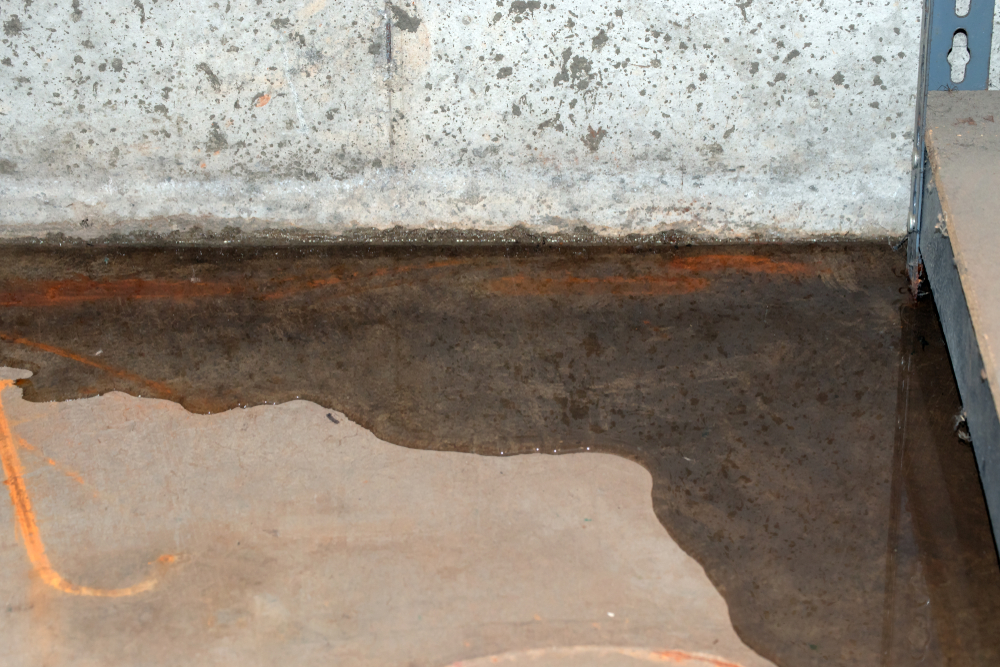
From frozen ground in January to heavy spring rains and humid summers, the soil around your foundation is constantly shifting, expanding, and contracting. Over time, that stress shows up in one of the most vulnerable places in your home: the basement floor. Whether you are dealing with hairline cracks, visible gaps along the walls, or outright water coming up through the basement floor, MA homeowners in this region face these issues more often than many realize. Understanding what causes these problems and how to address them is the first step toward protecting your home.
What Are Floor Cracks and Cold Joints, and Why Do They Form?
Your basement floor is a concrete slab, typically poured separately from the foundation walls. That seam where the floor meets the wall is called the cold joint, and it is one of the most common entry points for water in any basement. The term “cold joint” refers to the fact that the floor concrete was poured after the walls had already cured and cooled, meaning the two surfaces never truly bonded together. Over time, hydrostatic pressure from the surrounding soil pushes groundwater directly through this gap.
Cracks in the basement floor itself form for several reasons. Shrinkage during the original curing process is very common and usually results in hairline cracks that appear within the first few years of the home’s life. Settlement cracks happen when the soil beneath the slab shifts or erodes, causing sections of the floor to drop or separate. In areas like Lowell and Tewksbury, where clay-heavy soils retain moisture and freeze-thaw cycles are intense, both types of cracks tend to develop faster and worsen more aggressively than in milder climates.
The bottom line is that cracks and cold joint gaps are not just cosmetic problems. They are pathways for water, radon gas, and even soil gases to enter your living space.
Recognizing the Signs of a Failing Cold Joint or Floor Crack
Many homeowners in Tewksbury and Lowell first notice a problem after a heavy rainstorm or during the spring thaw. You might see a thin line of moisture tracing across the floor, white chalky deposits called efflorescence forming near the walls, or puddles gathering in the corners of the basement. In more serious cases, water comes up through the floor itself, pooling in low spots and soaking into anything stored down there.
Cove joint leaks in the basement are another telltale sign. The cove joint is essentially the same as the cold joint, and when it fails, water enters in a very specific pattern, typically along the perimeter of the floor where it meets the wall. If you run your hand along that seam after a rain and feel dampness, or if you notice efflorescence building up in that same area over several months, the cove joint is likely compromised.
Other warning signs include a musty odor that persists even after the basement dries out, rust stains on the floor near cracks, and visible widening of floor cracks over time. If a crack was once the width of a credit card and is now wide enough to fit a pencil, that indicates active movement and a more serious structural or drainage issue beneath the slab.
Basement Floor Crack Repair Options for Lowell and Tewksbury Homeowners
When it comes to basement floor crack repair in Lowell, MA, the right solution depends heavily on the type and severity of the crack, as well as the source of the water intrusion. Not every crack requires the same approach, and applying the wrong fix can actually make things worse by trapping moisture inside the concrete.
For non-structural hairline cracks that are stable and dry, epoxy or polyurethane injection is a reliable repair method. A contractor injects the material under pressure directly into the crack, filling the void and bonding the two sides of the concrete back together. This works well when the crack is truly dormant and not subject to further movement.
For active cracks where water is currently entering or where movement is ongoing, a flexible hydraulic cement or crystalline waterproofing compound is often a better choice. These materials can handle minor movement without cracking again and are designed to cure in the presence of water. Crystalline products actually penetrate the concrete and react chemically to seal capillary pathways over time, making them a long-term solution for basement floor crack repair.
Cold joint waterproofing in Tewksbury and Lowell typically involves a combination of approaches. The joint itself can be cleaned out, filled with a flexible sealant, and then overlaid with a waterproof membrane or drainage channel system. In many cases, contractors will pair this repair with an interior drainage system that redirects any water that does penetrate toward a sump pump, ensuring it never reaches the living area of the basement.
The Role of Hydrostatic Pressure and Soil Conditions in This Region
One reason cold joint and floor crack issues are so prevalent in the Lowell and Tewksbury area is the specific geology of northeastern Massachusetts. Much of this region sits on a combination of glacial till, sandy loam, and clay-bearing soils that retain water at different rates. When the ground becomes saturated after heavy rainfall or snowmelt, hydrostatic pressure builds up around and beneath the foundation.
This pressure does not distribute evenly. It finds the path of least resistance, which is almost always a crack, a cold joint, or a cove joint. Water coming up through the basement floor in Massachusetts homes is often the result of this pressure forcing water upward from below, not just sideways through the walls. This is why surface-only repairs frequently fail. If you seal a crack on the top of the floor without addressing the pressure underneath, the water simply finds the next weakest point.
Proper drainage grading around the exterior of your home, functioning gutters and downspouts, and a working sump pump system are all part of a complete solution. Interior waterproofing alone is not enough if the exterior conditions are directing all the water toward your foundation.
When to Call a Professional for Basement Waterproofing
Some homeowners attempt DIY repairs using store-bought hydraulic cement or crack filler products, and in some cases these can provide a temporary fix for minor issues. However, if you are seeing water coming up through the basement floor, if cracks are actively widening, or if you have multiple cove joint leaks in the basement, it is time to bring in a professional waterproofing contractor who understands the specific soil and weather conditions in Lowell and Tewksbury.
A qualified contractor will begin with a thorough inspection, including checking the exterior grading, examining the foundation walls for bowing or cracking, and assessing whether the existing drainage and sump system is adequate. From there, they can recommend a targeted repair plan that addresses both the symptoms and the root cause.
Cold joint waterproofing in Tewksbury and basement floor crack repair in Lowell, MA should not be treated as one-size-fits-all services. The right contractor will tailor their approach to your home’s age, construction type, soil conditions, and the severity of the water intrusion.
Conclusion
Basement floor cracks and cold joint failures are among the most common and most misunderstood problems facing homeowners in Lowell and Tewksbury. The combination of freeze-thaw cycles, clay-heavy soils, and seasonal rainfall creates conditions that put constant stress on your foundation. Recognizing the early signs, understanding what is causing the problem, and choosing the right repair method can save you thousands of dollars in damage and protect your home’s value for years to come. Whether you are dealing with a minor hairline crack or water actively coming up through the basement floor, taking action sooner rather than later is always the smarter choice.
Need The Best Foundation Crack Repair Specialist Near You?
At Done Right Services, we’ve been the trusted name in masonry since 1998, offering top-notch stone foundation repairs, crack repairs, and basement waterproofing throughout Massachusetts and New Hampshire. Our team of experts is dedicated to restoring your home’s foundation and ensuring your basement stays dry and safe. With our lifetime warranty and 15-year money-back guarantee on all concrete foundation services, you can trust that we’ll handle your needs with precision and care. Don’t let water leaks or foundation issues damage your home—reach out to us and experience the Done Right difference today!